|
Hi friend,
Shanah tovah, and welcome (back) to
Sefaria’s Weekly Parashah Study Companion!
This week is an exciting week for followers
of the weekly Torah portion — Jewish
communities around the world will celebrate
Simchat Torah by reading the very last Torah
portion, VeZot HaBerakhah, and then rolling
their scrolls all the way back to the
beginning, and starting again from Bereshit.
Last week, we sent out an email about VeZot
HaBerakhah (which you can read here, if you
missed it.) Having read the very beginning
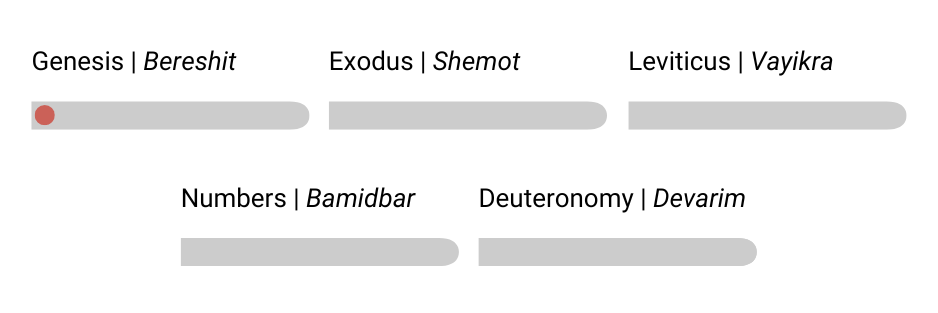
of Parashat Bereshit (“in the beginning”) on
Simchat Torah, we now settle into the new
cycle in earnest this Shabbat by reading the
full portion, which relates the stories of
the creation of the world and the first
generations of humanity.
|
|
|
|
וַיֹּאמֶר אֱלֹהִים יְהִי אוֹר וַיְהִי־אוֹר׃
God said, “Let there be light”; and there
was light.
Genesis 1:3
|
|
|
|
After God creates the earth and all its
creatures, Parashat Bereshit tells how the
first people, Adam and Eve, eat from the
Tree of Knowledge and are banished from the
Garden of Eden. The parashah continues with
their elder son, Cain, being destined to a
life of wandering after killing his brother,
Abel. Finally, the Torah intersperses a
genealogy with some mysterious hints of
various familial stories and concludes with
an ominous preview of next week’s parashah.
|
|
|
|
|
|
|
A Divine Recalibration
|
|
God is called by several different names in
the Torah. Why does the first mention of God
use the divine name that Jewish tradition
associates with the quality of strict
judgement? Rashi, the renowned 11th-century
northern French rabbi and commentator,
suggests a lesson about God’s creative
process and relationship with the created
world. See
Rashi on Genesis 1:1.
|
|
|
|
|
The First Births
|
|
Any baby born is an amazement, but imagine
the surprise as a parent welcoming the first
babies ever born. In his elucidation of
Parashat Bereshit, 20th-century scholar
Rabbi Adin Steinsaltz suggests how Cain and
Abel each brought a new understanding of the
world to Adam and Eve. See
Steinsaltz on Genesis 4:2.
|
|
|
|
|
|
The haftarah (accompanying reading from
Prophets) for Parashat Bereshit is from the
book of Isaiah (42:5–21
in the Sephardic tradition and
42:5–43:10
in the Ashkenazic tradition). This passage
of prophetic text parallels the description
of creation in Genesis, with the first few
verses using the image of God as creator to
underscore the divine ability to strengthen
and preserve the people of Israel — and why
they should, therefore, sing God’s praises.
|
|
|
|
|
|
|
|
Parashat Bereshit includes both the
story of God creating the world and
the story of the first act of human
violence (Cain murdering Abel). What
do you think we might learn from the
close proximity of these two stories?
|
|
|
|
|
|
|
In this parashah, the text says that
humans were created in the “image of
God.” What do you think this means,
and how might this idea shape our
understanding of human dignity and
worth?
|
|
|
|
|
|
|
According to Rashi (referenced above),
God originally planned to create the
world based solely on the attribute of
justice, before having a change of
heart. Why do you think God decided
the world could not endure under
justice alone?
|
|
|
|
|
|
|
|
|
|
|
|

|
Looking for guidance on how to study
|
the weekly parashah
|
on your own?
|
|
|
|
|