


(ב) דַּבֵּ֞ר אֶל־בְּנֵ֤י יִשְׂרָאֵל֙ וְאָמַרְתָּ֣ אֲלֵהֶ֔ם כִּ֤י תָבֹ֙אוּ֙ אֶל־הָאָ֔רֶץ אֲשֶׁ֥ר אֲנִ֖י נֹתֵ֣ן לָכֶ֑ם וְשָׁבְתָ֣ה הָאָ֔רֶץ שַׁבָּ֖ת לַיהֹוָֽה׃
(2) Speak to the Israelite people and say to them: When you enter the land that I assign to you, the land shall observe a sabbath of יהוה.
(א) שבת לה'. לְשֵׁם ה', כְּשֵׁם שֶׁנֶּאֱמַר בְּשַׁבַּת בְּרֵאשִׁית (עי' ספרא):
(1) שבת לה׳ [THEN SHALL THE LAND KEEP) A REST 'לה — This means a rest in honor of the Lord (not a rest for the Lord, as in v. 4: שבת שבתון יהיה לארץ, “there shall be a strict Sabbath for the land”, i. e. for the land to rest) in the same sense as these words are used in the case of the weekly Sabbath (lit., the Sabbath of Creation) (Exodus 20:10) where 'שבת לה cannot mean “a day for God to rest” (Sifra, Behar, Chapter 1 2).
(א) שַׁבָּת לַה׳ לְשֵׁם ה׳, כְּשֵׁם שֶׁנֶּאֱמַר בְּשַׁבַּת בְּרֵאשִׁית, לְשׁוֹן רַשִׁ"י (רש"י על ויקרא כ"ה:ב'). וְרַבּוֹתֵינוּ לֹא כָּךְ נִתְכַּוְּנוּ בְּמִדְרָשָׁם, כִּי כָל הַשַּׁבָּתוֹת גַּם הַמּוֹעֲדִים לְשֵׁם ה׳ הֵן, וְלֹא יֵאָמֵר בְּאֶחָד מֵהֶם "לַה׳", אֲבָל אָמַר "יִהְיֶה לָכֶם שַׁבָּתוֹן" (ויקרא כ"ג:כ"ד), וְאָמַר בְּיוֹם הַכִּפּוּרִים "שַׁבַּת שַׁבָּתוֹן הוּא לָכֶם" (שם לב). וּלְשׁוֹן הַבָּרַיְתָא בְּתוֹרַת כֹּהֲנִים (פרק א ב), "שַׁבָּת לַה׳", כְּשֵׁם שֶׁנֶּאֱמַר בְּשַׁבַּת בְּרֵאשִׁית כָּךְ נֶאֱמַר בַּשְּׁבִיעִית "שַׁבָּת לַה׳". אֲבָל פֵּרוּשׁ "שַׁבָּת לַה׳ אֱלֹקֶיךָ" הָאָמוּר בְּשַׁבָּת בְּרֵאשִׁית (שמות כ י), כִּי בוֹ שָׁבַת וַיִּנָּפַשׁ וְעַל כֵּן לֹא תַעֲשֶׂה כָל מְלָאכָה, וּלְכָךְ אָמְרוּ כִּי כֵן נֶאֱמַר בַּשְּׁמִטָּה, כִּי הִיא שְׁבִיעִית בַּשָּׁנִים. וְהִנֵּה בְּכָאן עוֹרְרוּ אוֹתָנוּ בְּסוֹד גָּדוֹל מִסּוֹדוֹת הַתּוֹרָה, כְּבָר רָמַז לָנוּ ר"א שֶׁכָּתַב, וְטַעַם "שַׁבָּת לַה׳" כְּיוֹם הַשַּׁבָּת, וְסוֹד יְמוֹת עוֹלָם רָמוּז בַּמָּקוֹם הַזֶּה. וְכוֹף אָזְנְךָ לִשְׁמֹעַ מַה שֶׁאֲנִי רַשַּׁאי לְהַשְׁמִיעֲךָ מִמֶּנּוּ בַּלָּשׁוֹן אֲשֶׁר אַשְׁמִיעֲךָ, וְאִם תִּזְכֶּה תִּתְבּוֹנֵן. כְּבָר כָּתַבְתִּי בְּסֵדֶר בְּרֵאשִׁית (בראשית ב ג) כִּי שֵׁשֶׁת יְמֵי בְּרֵאשִׁית הֵם יְמוֹת עוֹלָם וְיוֹם הַשְּׁבִיעִי שַׁבָּת לַה׳ אֱלֹקֶיךָ (שמות כ ו), כִּי בּוֹ יִהְיֶה שַׁבָּת לַשֵּׁם הַגָּדוֹל, כְּמוֹ שֶׁשָּׁנִינוּ (תמיד פ"ז מ"ד), בַּשְּׁבִיעִי מֶה הָיוּ אוֹמְרִים, "מִזְמוֹר שִׁיר לְיוֹם הַשַּׁבָּת", לֶעָתִיד לָבֹא שֶׁכֻּלָּהּ שַׁבָּת וּמְנוּחָה לְחַיֵּי הָעוֹלָמִים. וְהִנֵּה הַיָּמִים רֶמֶז לַאֲשֶׁר בָּרָא בְּמַעֲשֵׂה בְּרֵאשִׁית, וְהַשָּׁנִים יִרְמְזוּ לַאֲשֶׁר יִהְיֶה בִּבְרִיאַת כָּל יְמֵי עוֹלָם. וְעַל כֵּן הֶחְמִיר הַכָּתוּב בַּשְּׁמִטָּה יוֹתֵר מִכָּל חַיָּבֵי לָאוִין וְחִיֵּב הַגָּלוּת עָלֶיהָ, כְּמוֹ שֶׁהֶחְמִיר בָּעֲרָיוֹת (ויקרא י"ח:כ"ח), שֶׁנֶּאֱמַר "אָז תִּרְצֶה הָאָרֶץ אֶת שַׁבְּתֹתֶיהָ" (ויקרא כ"ו:ל"ד), וְהֶחְזִיר הָעִנְיָן פְּעָמִים רַבּוֹת "כָּל יְמֵי הָשַּׁמָּה תִּשְׁבֹּת" (שם שם לה), וְנֶאֱמַר "וְהָאָרֶץ תֵּעָזֵב מֵהֶם וְתִרֶץ אֶת שַׁבְּתֹתֶיהָ" (שם שם מג), וְכֵן שָׁנִינוּ (אבות פ"ה מ"ט), גָּלוּת בָּאָה עַל עִנּוּי הַדִּין וְעַל עִוּוּת הַדִּין וְעַל שְׁמִטַּת הָאָרֶץ; מִפְּנֵי שֶׁכָּל הַכּוֹפֵר בָּהּ אֵינוֹ מוֹדֶה בְּמַעֲשֵׂה בְּרֵאשִׁית וּבָעוֹלָם הַבָּא. וְכֵן הֶחְמִיר הַנָּבִיא וְגָזַר גָּלוּת עַל שִׁלּוּחַ עֲבָדִים בַּשָּׁנָה הַשְּׁבִיעִית, שֶׁנֶּאֱמַר (ירמיה לד יג יד) "אָנֹכִי כָּרַתִּי בְרִית אֶת אֲבוֹתֵיכֶם וְגוֹ' מִקֵּץ שֶׁבַע שָׁנִים" וְגוֹ', כִּי גַּם בָּעֶבֶד שְׁבִיעִית וְיוֹבֵל כו'. וְהַיּוֹבֵל יִוָּדַע עוֹד מִבְּרֵאשִׁית עַד וַיְכֻלּוּ, כִּי יָשׁוּבוּ בַּיּוֹבֵל הַכֹּל אִישׁ אֶל אֲחֻזָּתוֹ וְאִישׁ אֶל מִשְׁפַּחְתּוֹ, כִּי הוּא מוּסָד מוּסָּד, הַמַּאֲמִין יַחֲרִישׁ. וְזֶהוּ שֶׁנֶּאֱמַר "וְשָׁבְתָה הָאָרֶץ שַׁבָּת" (כאן), "וּקְרָאתֶם דְּרוֹר בָּאָרֶץ" (ויקרא כ"ה:י'), כִּי הִיא אֶרֶץ הַחַיִּים הַנִּרְמֶזֶת בַּפָּסוּק הָרִאשׁוֹן (בראשית א א), שֶׁבָּהּ נֶאֱמַר "וְהָאָרֶץ אֶזְכֹּר" (ויקרא כ"ו:מ"ב), וּכְבָר זָכַרְתִּי זֶה פְּעָמִים. וְשֶׁמָּא לָזֶה רָמְזוּ רַבּוֹתֵינוּ (ר"ה כא) בְּאָמְרָם, חֲמִשִּׁים שַׁעֲרֵי בִּינָה נִבְרְאוּ בָּעוֹלָם וְכֻלָּם נִמְסְרוּ לְמֹשֶׁה חוּץ מֵאֶחָד; כִּי כָל שְׁמִטָּה שַׁעַר בַּיִת אֶחָד, וְהִנֵּה הוֹדִיעוּהוּ כָּל הַהֲוָיָה מִתְּחִלָּה וְעַד סוֹף חוּץ מִן הַיּוֹבֵל קֹדֶשׁ:
(1) A SABBATH UNTO THE ETERNAL, “[This means] in honor of the Eternal [and that it is not primarily intended for man’s benefit], in the same sense as this expression is used in the case of the Sabbath of Creation” [i.e., the weekly Sabbath, of which it is also said, a Sabbath unto the Eternal]. This is the language of Rashi. But this was not the intention of the Rabbis in their interpretation, for all [weekly] Sabbaths, and also the festivals, are in honor of the Eternal, and yet in not one of them [i.e., the festivals] does Scripture say that they are “unto the Eternal.” Instead, it says it shall be a solemn rest unto you, and in the case of the Day of Atonement it states, It shall be unto you a Sabbath of solemn rest. The text of the Beraitha in the Torah Kohanim [quoted by Rashi] is as follows: “A Sabbath unto the Eternal. Just as it says with reference to the Sabbath of Creation, so is it said regarding the Sabbatical year, a Sabbath unto the Eternal.” But the meaning of a Sabbath unto the Eternal thy G-d stated in connection with the Sabbath of Creation, is that on it He ceased from work and rested and therefore thou shalt not do any manner of work. It was with reference to that idea that the Sages, of blessed memory, said that the same expression is also stated in the case of the Sabbatical year, since it is the seventh in [the cycle of] the years [just as the weekly Sabbath is the seventh day in the cycle of days; and the meaning thereof here is that since the seventh year is a Sabbath to the Eternal, as will be explained, we are to desist from working the land]. Now here [in the Torath Kohanim mentioned above, the Rabbis] have roused our attention to one of the great secrets of the Torah. Rabbi Abraham ibn Ezra has already given us a hint of it when he wrote: “The meaning of a Sabbath unto the Eternal is like that of the Sabbath-day. The secret of the years of the world is alluded to in this place.” [Thus far is Ibn Ezra’s comment.] Bend now your ear to understand that which I am permitted to inform you about it in the words that I will cause you to hear, and if you will be worthy, you will contemplate them [and understand them]. I have already written in Seder Bereshith that the six days of creation represent [all] the days of the world, and the seventh day is a Sabbath unto the Eternal thy G-d, for on it will be the Sabbath to the Great Name, just as we have been taught [in a Mishnah]: “On the seventh day what psalm did the Levites sing [in the Sanctuary? They sang] A Psalm, a Song. For the Sabbath-day — [a song] for the World to Come, which will be wholly a Sabbath, and rest for life everlasting.” Thus the [seven] days [of the week] allude to that which He created in the process of creation, and the [seven] years [of the Sabbatical cycle] refer to that which will occur during the creation of all “the days” of the world. It is for this reason that Scripture was more stringent regarding [the transgression of the laws of] the Sabbatical year than with respect to those guilty of transgressing all other negative commandments, and made it punishable with exile, just as He was stringent with respect to forbidden sexual relations [for which the punishment of the people, as opposed to that of the individual, is also exile]; as it is said, Then shall the Land be paid her Sabbaths, and He repeated this matter many times: As long as it lieth desolate it shall have rest, and it is further said, And the Land shall lie forsaken without them, and shall be paid her Sabbaths. “And so we have been taught [in a Mishnah]: “Exile comes for the delaying of justice, and for the perversion of justice, and for [the neglect of] the year of rest for the Land.” [This stringency of punishment is] because whoever denies it [i.e., the law of the Sabbatical year], does not acknowledge the work of creation and [life in] the World to Come. Similarly the prophet [Jeremiah] was stringent, and decreed exile for neglecting to send [Hebrew] servants to freedom in the seventh year [of their service], as it is said, I made a covenant with your fathers … At the beginning of seven years ye shall let go every man his brother etc., for in the case of a servant the seventh year is also like a [complete] Jubilee; and the Jubilee is known also [at the very beginning of the Torah] — from ‘Bereshith’ (In the beginning) to ‘Vayechulu’ (And there were finished) — intimating that in the Jubilee everything is to return [to its origin], every man unto his possession, and every man unto his family. For it is a sure foundation, and he that believeth shall keep silence. This is what is meant in saying, ‘v’shavtah ha’aretz shabbath’ (and ‘the land’ shall keep a Sabbath); and ye shall proclaim liberty ‘ba’aretz’ (throughout ‘the land’), for the reference here is to “the land of eternal life” which is alluded to in the first verse [of the Torah], and of which it is said, ‘v’ha’aretz ezkor’ (and I will remember ‘the land’). I have already mentioned this several times. Perhaps it is to this that our Rabbis alluded in saying: “Fifty gates [degrees] of understanding were created in the world, and all were transmitted to Moses with one exception.” For each cycle of seven years constitutes “the gate of one house” [creation], and thus He informed him of all existence from beginning to end, with the exception of the holy Jubilee.
(יז) וְלֹ֤א תוֹנוּ֙ אִ֣ישׁ אֶת־עֲמִית֔וֹ וְיָרֵ֖אתָ מֵֽאֱלֹהֶ֑יךָ כִּ֛י אֲנִ֥י יהוה אֱלֹהֵיכֶֽם׃
(17) Do not wrong one another, but fear your God; for I יהוה am your God.
Tosefet Bracha
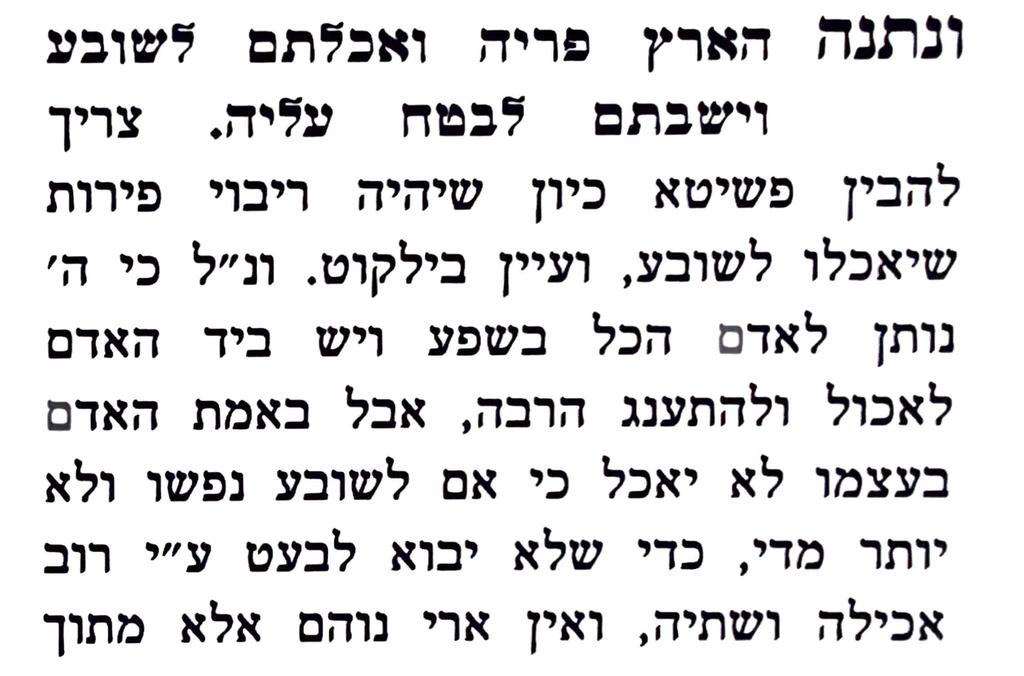
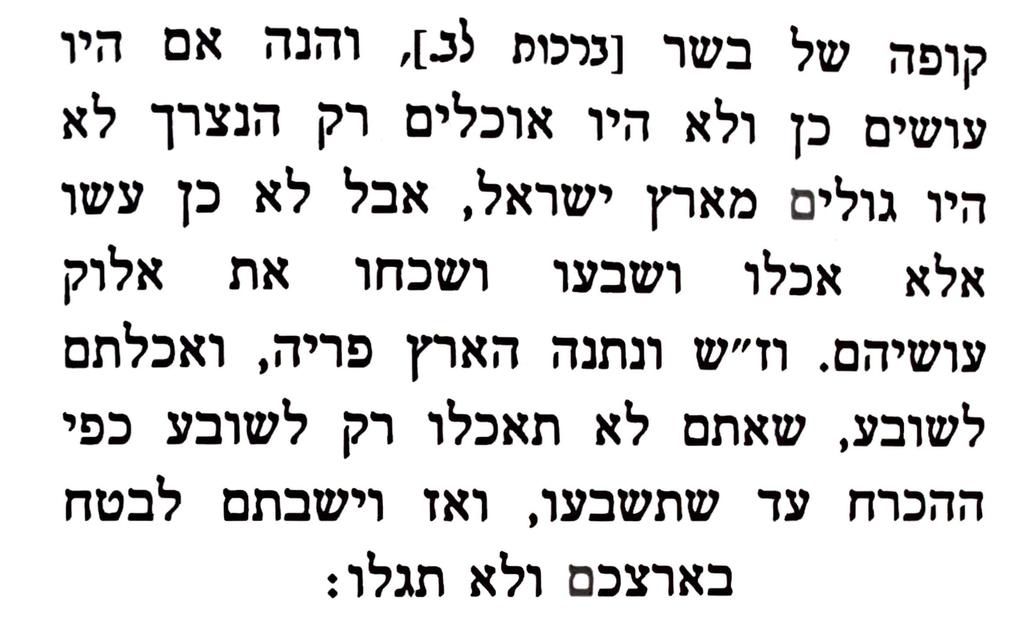
(יח) וַעֲשִׂיתֶם֙ אֶת־חֻקֹּתַ֔י וְאֶת־מִשְׁפָּטַ֥י תִּשְׁמְר֖וּ וַעֲשִׂיתֶ֣ם אֹתָ֑ם וִֽישַׁבְתֶּ֥ם עַל־הָאָ֖רֶץ לָבֶֽטַח׃ (יט) וְנָתְנָ֤ה הָאָ֙רֶץ֙ פִּרְיָ֔הּ וַאֲכַלְתֶּ֖ם לָשֹׂ֑בַע וִֽישַׁבְתֶּ֥ם לָבֶ֖טַח עָלֶֽיהָ׃
(18) You shall observe My laws and faithfully keep My rules, that you may live upon the land in security; (19) the land shall yield its fruit and you shall eat your fill, and you shall live upon it in security.
Ktav Sofer
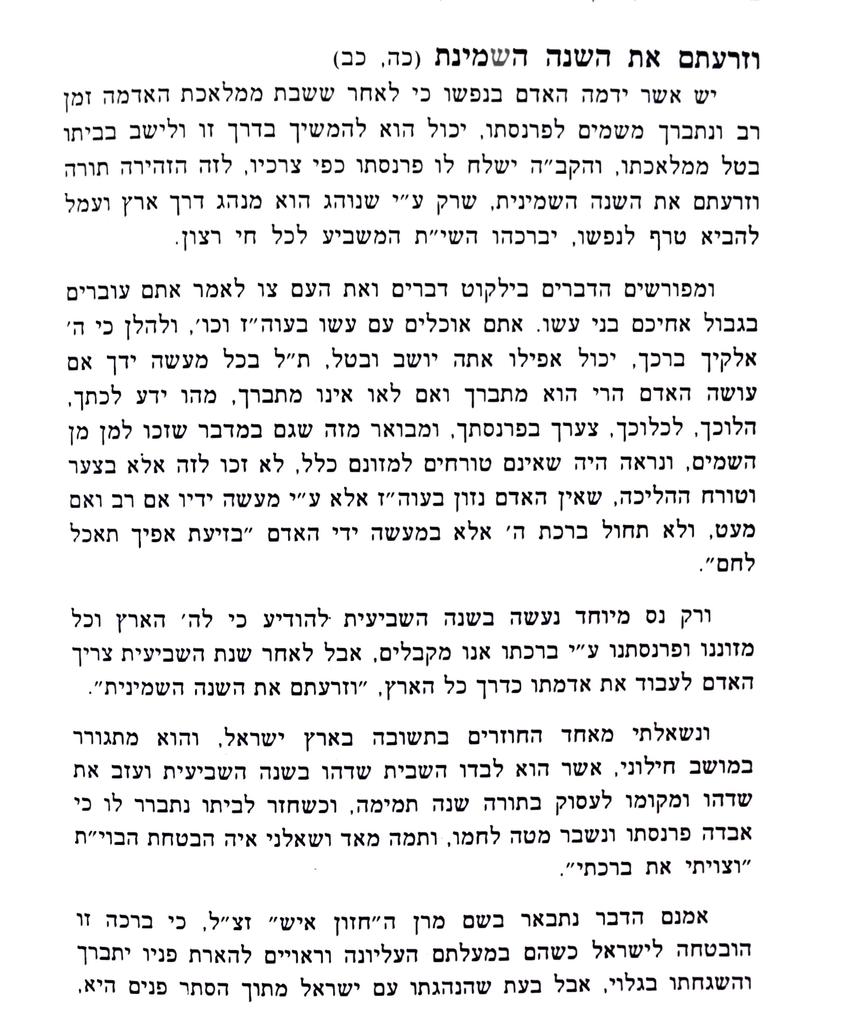
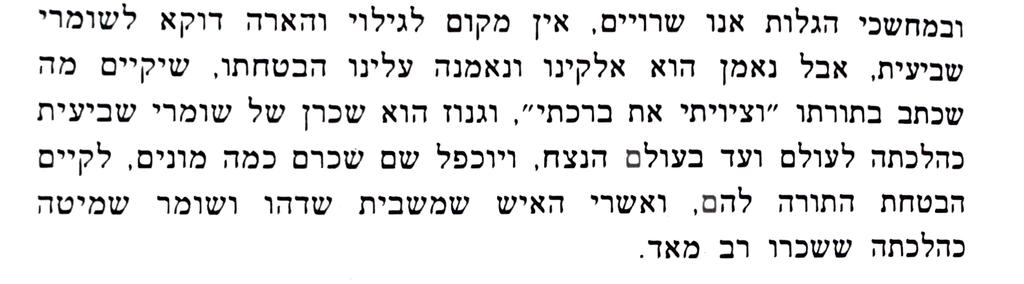
(כב) וּזְרַעְתֶּ֗ם אֵ֚ת הַשָּׁנָ֣ה הַשְּׁמִינִ֔ת וַאֲכַלְתֶּ֖ם מִן־הַתְּבוּאָ֣ה יָשָׁ֑ן עַ֣ד ׀ הַשָּׁנָ֣ה הַתְּשִׁיעִ֗ת עַד־בּוֹא֙ תְּב֣וּאָתָ֔הּ תֹּאכְל֖וּ יָשָֽׁן׃
(22) When you sow in the eighth year, you will still be eating old grain of that crop; you will be eating the old until the ninth year, until its crops come in.
Taam vDaat
(ג) אִם־בְּחֻקֹּתַ֖י תֵּלֵ֑כוּ וְאֶת־מִצְוֺתַ֣י תִּשְׁמְר֔וּ וַעֲשִׂיתֶ֖ם אֹתָֽם׃
(3) If you follow My laws and faithfully observe My commandments,
(ט) עוד ירצה על דרך אומרם ז"ל (אבות פ"ד) הוי גולה למקום תורה, שצריך לכתת רגליו ממקום למקום ללמוד תורה, וצא ולמד דבריהם ז"ל בגמרא (חגיגה ה׳:) כי כולן היו גולין ללמוד ויש שהיה הולך ששה חדשים וחוזר כמו כן לעסוק ביום א', והוא אומרו אם בחקתי שהיא עסק התורה צריכים שתלכו ממקומכם אחריה, גם כדי שתהיו פנויים אין נכון ללמוד והוא בביתו כי יטרדוהו בצורכי הבית, לכן יעזוב איש את אביו ואת אמו ויסע ממקומו ללכת אחריה: (י) ואומרו ואת מצותי תשמרו. יתבאר על דרך מה שאמרו במסכת שבת (ל"א:) מכריז ר' ינאי חבל על מאן דלית ליה דרתא ותרעא לדרתא עביד, שעיקר עסק התורה צריך שיהיה לשמור ולעשות, והוא אומרו אם בחקתי וגו' שהוא עסק התורה תנאי הוא הדבר ואת מצותי תשמרו ועשיתם אותם, ואמר ואת מצותי יתבאר על דרך אומרם בגמרא (ברכות י"ז:) הלומד שלא לשמה נוח לו שלא נברא, והקשו בתוספות עם אותה שאמרו לעולם יעסוק אדם בתורה אפילו שלא לשמה שמתוך שלא לשמה בא לשמה ותרצו כי הם ב' אופנים שלא לשמה, א' לקנטר, וא' להתכבד, לקנטר נוח לו שלא נברא, להתכבד יעסוק שמתוך וכו', והוא מאמר ה׳ אם בחקתי תלכו ותנאי הוא הדבר ואת מצותי שבה ב' מצות הצריכין בלימודה שלא ילמדו לא לקנטר ולא להתכבד, אז תשמרו ועשיתם אותם מבטיח הכתוב שהגם שתבא עבירה לידו יהיה ניצול ממנה, וכאומרם (סוטה כ"א.) תורה מגינא ומצלא מיצר הרע, וכמו שאמרו במסכת עבודה זרה (י"ז.) באותה מעשה של ר' חנינא ור' יונתן שחלפו אפיתחא דזונות וכו' דכתיב (משלי ב') מזימה תשמור עליך וגו', ודקדק לומר ועשיתם על דרך אומרם ז"ל (קידושין ל"ט:) ישב אדם ולא עבר עבירה נותנין לו שכר כעושה מצוה, והעמידוה כשבאה עבירה לידו וניצול ממנה, הגם שאינה אלא שמירה מעלה עליו הכתוב כאילו עשה מעשה מצות: (יא) והגם שדרש רבא (פסחים נ':) בפסוק כי גדול עד שמים חסדך זה הלומד שלא לשמה אלא להתכבד, הטעם לא שיש רצון הבורא בלימוד זה אלא לתכלית היוצא ממנו שיבא ללמוד לשמה, ותורה זו אין בסגולתה להציל מיצר הרע בבא עבירה לידו, ובזה יש לתרץ מה שהקשו שם בסוטה לרבי יוסף שאמר תורה בין בעידנא דעסיק בה בין בעידנא דלא עסיק בה מגנא ומצלא אלא מעתה דואג ואחיתופל מי לא עסקו בתורה אמאי לא אגינא עלייהו ע"כ, לדברינו אין קושיא שהם היו לומדים מתחלתם שלא לשמה ואין כח בתורה כזו להגין עליו מיצר הרע:
(9) A seventh reason for the Torah's use of the word תלכו may be related to the statement of our sages in Avot 4 to exile oneself to a place where Torah is to be found. One needs to beat a path to Torah centers in order to study there, hence the Torah speaks of תלכו, "you shall walk." There is a story in Chagigah 5 about a certain Rabbi Idi who used to have to travel 3 months in one direction to attend to his business and three months back home in order to spend a single day in the house of his Rabbi. The Torah suggests here that even if one has the opportunity to study at home it is better to to leave home in order to study and to fulfil the commandment to "walk in My statutes." (10) As to the words ואת מצותי תשמרו, these may be understood in light of a comment by our sages in Shabbat 31: "Rabbi Yannai proclaimed: 'how sad if a person who does not own a courtyard constructs an entrance-gate to such a non-existent courtyard.' He referred to people who do not have reverence for G'd and yet study Torah. The important thing is to observe the commandments. Unless studying Torah has as its objective performance of its precepts, such study is of questionable value. When the Torah speaks of בחקותי תלכו it referred to study whereas it admonishes us that this must be in order את מצותי תשמרו ועשיתם אותם, 'to observe and perform My commandments.'" We have a statement in Berachot 17 according to which if someone studies for unwholesome reasons he would have been better off if he had never been born. Tossaphot question this statement in light of the well known principle that it is acceptable to do things for the wrong reason because this leads to one eventually doing the right thing for the right reason. They answer that there are two ways of doing things for the wrong reason. 1) To find a reason to criticise G'd's Torah; 2) to gain personal fame due to one's Torah knowledge. If one studies Torah in order to criticise G'd and the Torah scholars it is better if one had not been born at all; if, on the other hand, one had ulterior motives such as wanting to be called Rabbi and the like, we may assume that eventually one will study Torah for the right reasons without ulterior motives. The Torah here assures us that if one does not pursue Torah study for the wrong reasons תשמרו ועשיתם אותם, you will observe and perform My commandments even when confronted with temptation, etc. The Torah you have studied for the right reasons will protect you against the pitfalls and the temptation by Satan. Sotah 21 is on record that Torah protects and saves from the evil inclination; Avodah Zarah 17 tells of Rabbi Chaninah and Rabbi Yonathan who were faced with the choice of either passing a house of idol worship or a whorehouse. They debated which was the worse temptation and decided to pass the house of ill-repute in order to merit the reward for resisting the temptation to enter there. When they reached the house in question the harlots withdrew to the inside. One Rabbi asked the other how they had merited to not even have to come face to face with temptation. The colleague answered by quoting Proverbs 2,11: "Foresight will protect you, understanding will preserve you." If one is on one's guard against temptation one will be fortified against it. Rava concluded that the word מזמה (which we translated as "foresight") refers to matters of harlotry against which Torah study is an effective defence. The word ועשיתם is also understood by Kidushin 39 as follows: "When a person sits still, not committing a sin, he receives the reward due for performing a commandment; they understood this to mean that when a sin approaches him he will be saved from committing it; we learn from here that though a person was only passive in abstaining from wrongdoing it is accounted for him as an activity, i.e. ועשיתם אותם. (11) It is true that in Pessachim 50 the Talmud interprets the difference between the expression: "for your kindness extends to the Heavens" (Psalms 57,11) and Psalms 108,5 "for Your kindness extends beyond the Heavens" to mean that the former refers to a person studying Torah שלא לשמה, but to gain honour for himself. The reason for this is not that G'd is so delighted with this kind of Torah study but He is confident of the eventual impact Torah study makes on the student, refining his character and changing his outlook in life. This kind of Torah study does not possess the power to protect the person studying against the temptation by the evil urge. This fact helps us answer the statement of Rabbi Yoseph that Torah protects the student both at the time he is busy studying as well as at other times. The world asks that if this statement is true how was it that the Torah study of Doeg and Achitophel did not protect them against the evil urge in their time? According to our approach we can answer this simply by assuming that their Torah study was not לשמה but that they had ulterior motives and this is why the merit of their Torah study did not act as a shield against the יצר הרע, the evil urge.