


"After my daughter, Michal, was killed in a terrorist attack in 1974, soon after the Yom Kippur War, I stopped painting, because to paint required a concentration and pressure that were more than I could handle, and turned to sculpture, whose physical demands were to a great degree therapeutic. Not surprisingly, my choice of subjects centered around the biblical stories of the sacrifice of Isaac and the daughter of Yiphtach." Yonatan Charles "Chuck" Edelson (b. 1929), The Last Amateur, 2010, p. 78.
Editors note: In visiting my cousin Chuck's home gallery in January, 2023, many of his works on display centered on the Biblical story of the vineyard of Naboth.
(טו) וַֽיְהִי֙ כִּשְׁמֹ֣עַ אִיזֶ֔בֶל כִּי־סֻקַּ֥ל נָב֖וֹת וַיָּמֹ֑ת וַתֹּ֨אמֶר אִיזֶ֜בֶל אֶל־אַחְאָ֗ב ק֣וּם רֵ֞שׁ אֶת־כֶּ֣רֶם ׀ נָב֣וֹת הַיִּזְרְעֵאלִ֗י אֲשֶׁ֤ר מֵאֵן֙ לָתֶת־לְךָ֣ בְכֶ֔סֶף כִּ֣י אֵ֥ין נָב֛וֹת חַ֖י כִּי־מֵֽת׃ (טז) וַיְהִ֛י כִּשְׁמֹ֥עַ אַחְאָ֖ב כִּ֣י מֵ֣ת נָב֑וֹת וַיָּ֣קׇם אַחְאָ֗ב לָרֶ֛דֶת אֶל־כֶּ֛רֶם נָב֥וֹת הַיִּזְרְעֵאלִ֖י לְרִשְׁתּֽוֹ׃ {פ}(יז) וַֽיְהִי֙ דְּבַר־ה' אֶל־אֵלִיָּ֥הוּ הַתִּשְׁבִּ֖י לֵאמֹֽר׃ (יח) ק֣וּם רֵ֗ד לִקְרַ֛את אַחְאָ֥ב מֶלֶךְ־יִשְׂרָאֵ֖ל אֲשֶׁ֣ר בְּשֹׁמְר֑וֹן הִנֵּה֙ בְּכֶ֣רֶם נָב֔וֹת אֲשֶׁר־יָ֥רַד שָׁ֖ם לְרִשְׁתּֽוֹ׃ (יט) וְדִבַּרְתָּ֨ אֵלָ֜יו לֵאמֹ֗ר כֹּ֚ה אָמַ֣ר ה' הֲרָצַ֖חְתָּ וְגַם־יָרָ֑שְׁתָּ וְדִבַּרְתָּ֨ אֵלָ֜יו לֵאמֹ֗ר כֹּ֚ה אָמַ֣ר ה' בִּמְק֗וֹם אֲשֶׁ֨ר לָקְק֤וּ הַכְּלָבִים֙ אֶת־דַּ֣ם נָב֔וֹת יָלֹ֧קּוּ הַכְּלָבִ֛ים אֶת־דָּמְךָ֖ גַּם־אָֽתָּה׃
(15) As soon as Jezebel heard that Naboth had been stoned to death, she said to Ahab, “Go and take possession of the vineyard which Naboth the Jezreelite refused to sell you for money; for Naboth is no longer alive, he is dead.” (16) When Ahab heard that Naboth was dead, Ahab set out for the vineyard of Naboth the Jezreelite to take possession of it. (17) Then the word of the LORD came to Elijah the Tishbite: (18) “Go down and confront King Ahab of Israel who [resides] in Samaria. He is now in Naboth’s vineyard; he has gone down there to take possession of it. (19) Say to him, ‘Thus said the LORD: Would you murder and take possession? Thus said the LORD: In the very place where the dogs lapped up Naboth’s blood, the dogs will lap up your blood too.’”
Collage interpreting the Vineyard of Naboth, by Yonatan Charles Edelson, displayed in his home gallery in Moshav Orot, Israel.
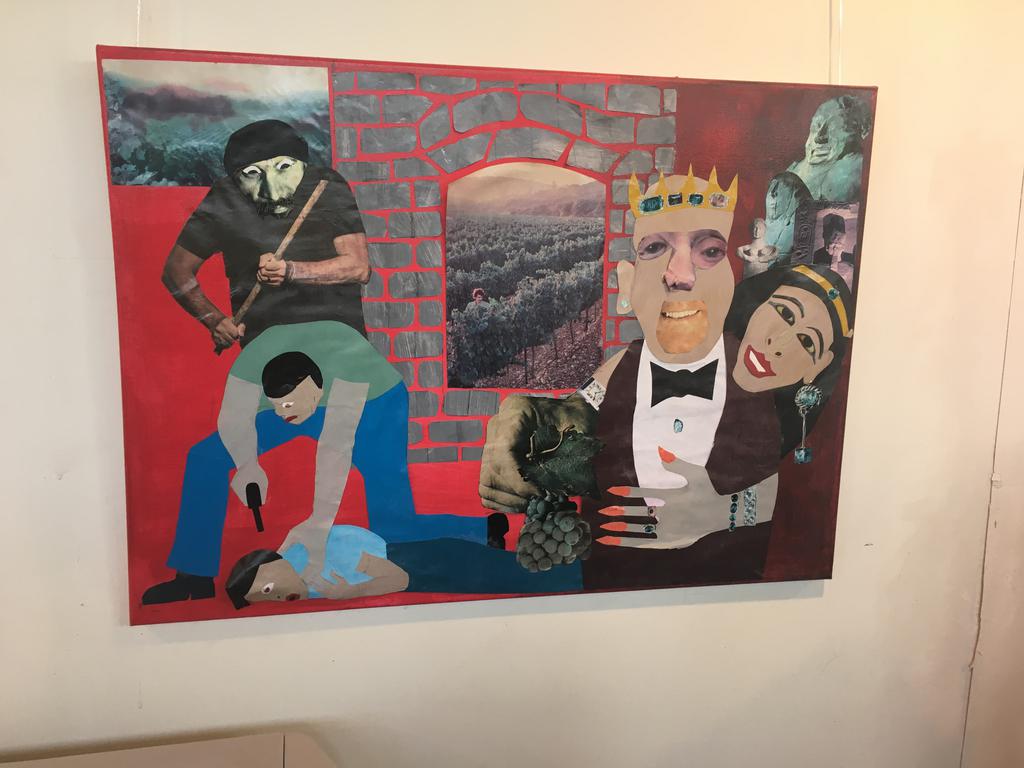
Parashat Mishpatim is largely a response to the Vineyard of Naboth.
(יד) וְכִֽי־יָזִ֥ד אִ֛ישׁ עַל־רֵעֵ֖הוּ לְהׇרְג֣וֹ בְעׇרְמָ֑ה מֵעִ֣ם מִזְבְּחִ֔י תִּקָּחֶ֖נּוּ לָמֽוּת׃ {ס}
(14) When one party schemes against another and kills through treachery, you shall take that person from My very altar to be put to death.
Kings of Northern Israel from Omri to Jehu
The House of Omri
Omri 882–871 BCE
Ahab 873–852
Jehoram 851–842
The House of Jehu
Jehu 842–814
Feld, Edward. The Book of Revolutions: The Battles of Priests, Prophets, and Kings That Birthed the Torah (p. 16). The Jewish Publication Society. Kindle Edition.
"What distinguishes this law code, first of all, is its ethical bent. While other Near Eastern codes differentiate between nobles and freemen, the Covenant Code makes no such distinction. Even slaves are treated as persons, though there is some differentiation between their status in the law and that of freemen. The exhortations at the end of the code affirm the ethical behavior demanded of each individual, even when there can be no judicial enforcement. A distinction is made between the Israelite and the foreigner, especially in the slave law, but even one’s “enemy” deserves kind behavior. Even the stranger—that is, the nonnative, or noncitizen—should not be oppressed. Secondly, the code is not simply a civil code regulating judicial processes and everyday behaviors of people: it is a code that demands the exclusive worship of the God of Israel. Civil and religious law are intertwined...
"The [Covenant] [C]ode reflects the religious and ethical principles fought for by the prophets Elijah and Elisha. Thus, the very revolution instigated by these two prophets in Northern Israel resulted in the first law code recorded in the Bible. And central to its authoritative role is the very idea of covenant, a critical political concept of Northern Israel...
"What triumphed with the revolution of Jehu was a prophetic vision: Israel stood in relation to Israel’s God, Adonai; the two were attached to each other, covenanted with each other. Israel’s God demanded exclusive worship, the exercise of uncorrupted justice, and the formation of a society in which the least among them was cared for. In return, the people Israel would receive God’s protective care. God will be “an enemy to your enemies” (23:22) and “God will bless your bread and your water and will remove sickness from your midst” (23:25). The code is a fusion of the culture of the Near East, the new reality of an increasingly wealthy Northern Israelite confederation, and prophetic ideals. This fusion creates a new national consciousness, a covenanted relation between Israel and its God. If the people Israel remain loyal to this covenant, God will protect them. God and Israel are related to each other, covenanted with each other. Indeed, the latter prophets in Northern Israel, Amos and Hosea, would describe the covenantal relationship as that of husband and wife, or parent and child, metaphors for the most intimate of relationships."
Feld, Edward. The Book of Revolutions: The Battles of Priests, Prophets, and Kings That Birthed the Torah (p. 40). The Jewish Publication Society. Kindle Edition.