Save "Ze Kollel Yevamot 122a 

Yonatan the demon expert
"
Ze Kollel Yevamot 122a Yonatan the demon expert
מַתְנִי׳ מְעִידִין לְאוֹר הַנֵּר וּלְאוֹר הַלְּבָנָה וּמַשִּׂיאִין עַל פִּי בַּת קוֹל מַעֲשֶׂה בְּאֶחָד שֶׁעָמַד עַל רֹאשׁ הָהָר וְאָמַר אִישׁ פְּלוֹנִי בֶּן פְּלוֹנִי מִמָּקוֹם פְּלוֹנִי מֵת הָלְכוּ וְלֹא מָצְאוּ שָׁם אָדָם וְהִשִּׂיאוּ אֶת אִשְׁתּוֹ
MISHNA: Witnesses may testify that an individual died even if they saw his corpse only by candlelight or by moonlight. And the court may allow a woman to marry based on the statement of a disembodied voice proclaiming that her husband died. There was an incident with regard to a certain individual who stood at the top of a mountain and said: So-and-so, son of so-and-so, from such and such a place died. They went and found no person there, but even so they relied upon the statement and allowed the wife of the individual declared dead to marry.

(י) שמעו קול שאומר איש פלוני מת והלכו ולא מצאו שם אדם משיאין את אשתו ואם שמעו קול זה בשדה או בבור או בחורבה אין משיאין על פי אותו קול דחיישינן שמא שד הוא כיון שיצא הקול ממקום שהשדים מצויים שם:

(10) If they heard a voice saying "So-and-so died," and they went [to look] but did not find a man (i.e. they did not find a source for the voice), they may still permit his wife to remarry. If they heard this voice in the field or a cistern or a ruin, we do not permit remarriage on the basis of this voice because we are concerned that it came from a demon, as the voice derived from locales frequented by demons.

וְשׁוּב מַעֲשֶׂה בְּצַלְמוֹן בְּאֶחָד שֶׁאָמַר אֲנִי אִישׁ פְּלוֹנִי בֶּן אִישׁ פְּלוֹנִי נְשָׁכַנִי נָחָשׁ וַהֲרֵי אֲנִי מֵת וְהָלְכוּ וְלֹא הִכִּירוּהוּ וְהָלְכוּ וְהִשִּׂיאוּ אֶת אִשְׁתּוֹ גְּמָ׳ אָמַר רַבָּה בַּר שְׁמוּאֵל תָּנָא בֵּית שַׁמַּאי אוֹמְרִים אֵין מַשִּׂיאִין עַל פִּי בַּת קוֹל וּבֵית הִלֵּל אוֹמְרִים מַשִּׂיאִין עַל פִּי בַּת קוֹל מַאי קָא מַשְׁמַע לַן מַתְנִיתִין הִיא הָא קָא מַשְׁמַע לַן דְּאִי מַשְׁכַּחַתְּ סְתָמָא דְּאֵין מַשִּׂיאִין בֵּית שַׁמַּאי הִיא וְהָלְכוּ וְלֹא מָצְאוּ וְדִלְמָא שֵׁד הֲוָה אָמַר רַב יְהוּדָה אָמַר רַב שֶׁרָאוּ לוֹ דְּמוּת אָדָם אִינְהוּ נָמֵי דָּמוּ דַּחֲזוֹ לֵיהּ בָּבוּאָה וְאִינְהוּ נָמֵי אִית לְהוּ בָּבוּאָה דַּחֲזוֹ לֵיהּ בָּבוּאָה דְבָבוּאָה וְדִלְמָא לְדִידְהוּ אִית לְהוּ בָּבוּאָה דְבָבוּאָה אָמַר רַבִּי חֲנִינָא אָמַר לִי יוֹנָתָן שֵׁידָא בָּבוּאָה אִית לְהוּ בָּבוּאָה דְבָבוּאָה לֵית לְהוּ

And there was another incident in Tzalmon, a city in the Galilee, where a particular man said: I am so-and-so, son of so-and-so. A snake bit me and I am dying. And they went and found his corpse but could not recognize him, yet they went ahead and allowed his wife to marry based on what he said in his dying moments. GEMARA: Rabba bar Shmuel said: It was taught in a baraita that Beit Shammai say: The judges of a court may not allow a woman to marry based on the statement of a disembodied voice; they require actual testimony. And Beit Hillel say: The judges may allow a woman to marry based on the statement of a disembodied voice. The Gemara asks: What is Rabba bar Shmuel teaching us here? This is simply our mishna, since the decisive ruling follows Beit Hillel’s opinion. The Gemara answers that he teaches us this: That if an anonymous mishna or baraita is found that states that the judges may not allow a woman to marry under such circumstances, it is simply the opinion of Beit Shammai, and is not the accepted ruling. With regard to the incident where they heard a disembodied voice but went and found no person there, which is mentioned in the mishna, the Gemara asks: Perhaps it was a demon. Rav Yehuda said that Rav said: They saw that he had the form of a person, so they knew it was not a demon. The Gemara asks: They, i.e., demons, also appear similar to people. The Gemara answers: They saw that he had a shadow. The Gemara asks: But they also have a shadow. The Gemara answers: It was a case where they saw that he had a shadow of a shadow. The Gemara asks: But perhaps they also have a shadow of a shadow? Rabbi Ḥanina said: Yonatan the demon expert said to me: They have a shadow, but they do not have a shadow of a shadow.

a little promenade amongs the demons. If you dare.

תניא אבא בנימין אומר אלמלי נתנה רשות לעין לראות אין כל בריה יכולה לעמוד מפני המזיקין

אמר אביי אינהו נפישי מינן וקיימי עלן כי כסלא לאוגיא

אמר רב הונא כל חד וחד מינן אלפא משמאליה ורבבתא מימיניה

אמר רבא האי דוחקא דהוי בכלה מנייהו הוי הני ברכי דשלהי מנייהו הני מאני דרבנן דבלו מחופיא דידהו הני כרעי דמנקפן מנייהו

האי מאן דבעי למידע להו לייתי קיטמא נהילא ונהדר אפורייה ובצפרא חזי כי כרעי דתרנגולא האי מאן דבעי למחזינהו ליתי שלייתא דשונרתא אוכמתא בת אוכמתא בוכרתא בת בוכרתא ולקליה בנורא ולשחקיה ולימלי עיניה מניה וחזי להו ולשדייה בגובתא דפרזלא ולחתמי' בגושפנקא דפרזלא דילמא גנבי מניה ולחתום פומיה כי היכי דלא ליתזק רב ביבי בר אביי עבד הכי חזא ואתזק בעו רבנן רחמי עליה ואתסי:

In another baraita it was taught that Abba Binyamin says: If the eye was given permission to see, no creature would be able to withstand the abundance and ubiquity of the demons and continue to live unaffected by them.

Similarly, Abaye said: They are more numerous than we are and they stand over us like mounds of earth surrounding a pit.

Rav Huna said: Each and every one of us has a thousand demons to his left and ten thousand to his right. God protects man from these demons, as it says in the verse: “A thousand may fall at your side, and ten thousand at your right hand; they will not approach you” (Psalms 91:7).

Summarizing the effects of the demons, Rava said: The crowding at the kalla, the gatherings for Torah study during Elul and Adar, is from the demons; those knees that are fatigued even though one did not exert himself is from the demons; those clothes of the Sages that wear out, despite the fact that they do not engage in physical labor, is from friction with the demons; those feet that are in pain is from the demons.

One who seeks to know that the demons exist should place fine ashes around his bed, and in the morning the demons’ footprints appear like chickens’ footprints, in the ash. One who seeks to see them should take the afterbirth of a firstborn female black cat, born to a firstborn female black cat, burn it in the fire, grind it and place it in his eyes, and he will see them. He must then place the ashes in an iron tube sealed with an iron seal [gushpanka] lest the demons steal it from him, and then seal the opening so he will not be harmed. Rav Beivai bar Abaye performed this procedure, saw the demons, and was harmed. The Sages prayed for mercy on his behalf and he was healed.

“If we had a keen vision and feeling of all ordinary human life, it would be like hearing the grass grow and the squirrel’s heart beat, and we should die of that roar which lies on the other side of silence.”
Middlemarch, George Eliot
וְדִלְמָא צָרָה הֲוַאי תָּנָא דְּבֵי רַבִּי יִשְׁמָעֵאל בִּשְׁעַת הַסַּכָּנָה כּוֹתְבִין וְנוֹתְנִין אַף עַל פִּי שֶׁאֵין מַכִּירִין
The Gemara asks: And perhaps it was a rival wife, or some other enemy of that man’s wife, who cried out that her husband was dead and then fled, in order to trick her into disgracing herself by remarrying while her husband was still alive? The Gemara answers: The school of Rabbi Yishmael taught: During a period of danger, one may write and give a bill of divorce to a woman, although the witnesses do not know the husband, because we do not raise many suspicions at such a time. This case was similar to a period of danger in that they did not find witnesses that her husband died, and therefore the court did not require further clarification.
מַתְנִי׳ אָמַר רַבִּי עֲקִיבָא כְּשֶׁיָּרַדְתִּי לִנְהַרְדְּעָא לְעַבֵּר הַשָּׁנָה מְצָאַנִי נְחֶמְיָה אִישׁ בֵּית דְּלִי אָמַר לִי שָׁמַעְתִּי שֶׁאֵין מַשִּׂיאִין אֶת הָאִשָּׁה בְּאֶרֶץ יִשְׂרָאֵל עַל פִּי עֵד אֶחָד אֶלָּא יְהוּדָה בֶּן בָּבָא וְנוּמֵּיתִי לוֹ כֵּן הַדְּבָרִים אָמַר לִי אֱמוֹר לָהֶם מִשְּׁמִי אַתֶּם יוֹדְעִים שֶׁהַמְּדִינָה מְשׁוּבֶּשֶׁת בִּגְיָיסוֹת מְקוּבְּלַנִי מֵרַבָּן גַּמְלִיאֵל הַזָּקֵן שֶׁמַּשִּׂיאִין אֶת הָאִשָּׁה עַל פִּי עֵד אֶחָד וּכְשֶׁבָּאתִי וְהִרְצֵיתִי הַדְּבָרִים לִפְנֵי רַבָּן גַּמְלִיאֵל שָׂמַח לִדְבָרַי וְאָמַר מָצָאנוּ חָבֵר לְרַבִּי יְהוּדָה בֶּן בָּבָא מִתּוֹךְ הַדָּבָר נִזְכַּר רַבָּן גַּמְלִיאֵל שֶׁנֶּהֶרְגוּ הֲרוּגִים בְּתֵל אַרְזָא וְהִשִּׂיא רַבָּן גַּמְלִיאֵל נְשׁוֹתֵיהֶן עַל פִּי עֵד אֶחָד וְהוּחְזְקוּ לִהְיוֹת מַשִּׂיאִין עֵד מִפִּי עֵד מִפִּי עֶבֶד מִפִּי אִשָּׁה מִפִּי שִׁפְחָה רַבִּי אֱלִיעֶזֶר וְרַבִּי יְהוֹשֻׁעַ אוֹמְרִים אֵין מַשִּׂיאִין אֶת הָאִשָּׁה עַל פִּי עֵד אֶחָד רַבִּי עֲקִיבָא אוֹמֵר לֹא עַל פִּי אִשָּׁה וְלֹא עַל פִּי עֶבֶד וְלֹא עַל פִּי שִׁפְחָה וְלֹא עַל פִּי קְרוֹבִים
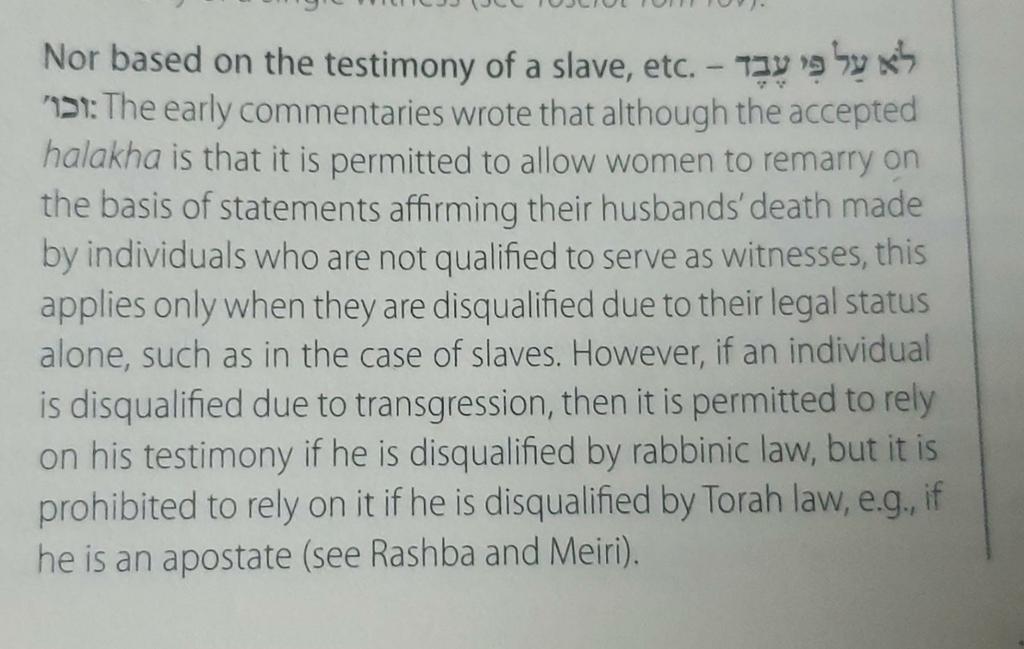
MISHNA: Rabbi Akiva said: When I descended to Neharde’a, in Babylonia, to intercalate the year, I found the Sage Neḥemya of Beit D’li. He said to me: I heard that the Sages in Eretz Yisrael do not allow a woman to remarry based on the testimony of a single witness, except for Yehuda ben Bava. And I told him: That is so. He said to me: Tell the Sages in my name: You know that the country is confounded by army troops, and I cannot come myself. I declare that I received this tradition from Rabban Gamliel the Elder, that the court may allow a woman to remarry based on the testimony of a single witness. Rabbi Akiva continues: And when I came and presented the matter before Rabban Gamliel of Yavne, the grandson of Rabban Gamliel the Elder, he rejoiced at my words and said: We have found a companion who agrees with Rabbi Yehuda ben Bava, and since his lenient opinion is no longer the opinion of a lone Sage, it may now be relied upon. As a result of this event, Rabban Gamliel remembered that people were murdered in Tel Arza, and Rabban Gamliel then allowed their wives to remarry based on only one witness. And from then onward they established as protocol to allow a woman to remarry based on hearsay testimony, a slave’s testimony, a woman’s testimony, or a maidservant’s testimony. Rabbi Eliezer and Rabbi Yehoshua say: The court may not allow a woman to remarry based on only one witness. Rabbi Akiva says: The court may not allow a woman to marry based on the testimony of a woman, nor based on the testimony of a slave, nor based on the testimony of a maidservant, nor based on the testimony of close relatives.
what do you make of Raban Gamiel's rejoicing?
גְּמָ׳ וְסָבַר רַבִּי עֲקִיבָא עַל פִּי אִשָּׁה לָא וְהָתַנְיָא רַבִּי שִׁמְעוֹן בֶּן אֶלְעָזָר אוֹמֵר מִשּׁוּם רַבִּי עֲקִיבָא אִשָּׁה נֶאֱמֶנֶת לְהָבִיא גִּיטָּהּ מִקַּל וָחוֹמֶר וּמָה נָשִׁים שֶׁאָמְרוּ חֲכָמִים אֵין נֶאֱמָנוֹת לוֹמַר מֵת בַּעְלָהּ נֶאֱמָנוֹת לְהָבִיא גִּיטֵּיהֶן זוֹ שֶׁנֶּאֱמֶנֶת לוֹמַר מֵת בַּעְלָהּ אֵינוֹ דִּין שֶׁנֶּאֱמֶנֶת לְהָבִיא גִּיטָּהּ נָשִׁים שֶׁאָמְרוּ חֲכָמִים הוּא דְּלָא מְהֵימְנִי אִשָּׁה בְּעָלְמָא מְהֵימְנָא לָא קַשְׁיָא כָּאן קוֹדֶם שֶׁהֶחֱזִיקוּ כָּאן לְאַחַר שֶׁהֶחֱזִיקוּ
GEMARA: The Gemara asks: Does Rabbi Akiva hold that the court may not allow a woman to remarry based on another woman’s testimony? But isn’t it taught in a baraita: Rabbi Shimon ben Elazar says in the name of Rabbi Akiva: A woman is trusted to bring her own bill of divorce and affirm in court that it was written and signed properly, and that trust is based on the following a fortiori inference: If women, e.g., a rival wife, whom the Sages said are not deemed credible to say that another woman’s husband died, are nevertheless trusted to bring their bills of divorce, then is it not logical that this woman herself, who is deemed credible to say that her husband died, should be trusted to bring her own bill of divorce? This statement indicates that according to Rabbi Akiva, it is specifically the women who the Sages mentioned who are not deemed credible. In general, a woman is deemed credible, and another woman is permitted to remarry on the basis of her testimony. The Gemara answers: This is not difficult. Here, where Rabbi Akiva disqualified the testimony of a woman, it was before they established the protocol that a woman may be permitted to remarry on the basis of another woman’s testimony. There, where he allowed it, it was after they established that protocol.