
Save "Hebrew Club Jan 30
"
Hebrew Club Jan 30
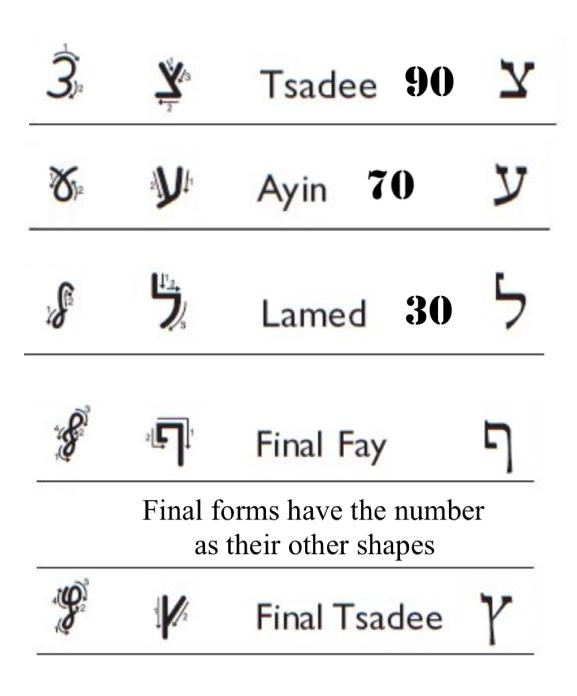
Link to script page with numerical equivalents

אצל

צלע

אצילי

ספר

(י) וַיִּרְא֕וּ אֵ֖ת אֱלֹהֵ֣י יִשְׂרָאֵ֑ל וְתַ֣חַת רַגְלָ֗יו כְּמַעֲשֵׂה֙ לִבְנַ֣ת הַסַּפִּ֔יר וּכְעֶ֥צֶם הַשָּׁמַ֖יִם לָטֹֽהַר׃ (יא) וְאֶל־אֲצִילֵי֙ בְּנֵ֣י יִשְׂרָאֵ֔ל לֹ֥א שָׁלַ֖ח יָד֑וֹ וַֽיֶּחֱזוּ֙ אֶת־הָ֣אֱלֹהִ֔ים וַיֹּאכְל֖וּ וַיִּשְׁתּֽוּ׃ {ס} (יב) וַיֹּ֨אמֶר יְהֹוָ֜ה אֶל־מֹשֶׁ֗ה עֲלֵ֥ה אֵלַ֛י הָהָ֖רָה וֶהְיֵה־שָׁ֑ם וְאֶתְּנָ֨ה לְךָ֜ אֶת־לֻחֹ֣ת הָאֶ֗בֶן וְהַתּוֹרָה֙ וְהַמִּצְוָ֔ה אֲשֶׁ֥ר כָּתַ֖בְתִּי לְהוֹרֹתָֽם׃

(10) and they saw the God of Israel: under His feet there was the likeness of a pavement of sapphire, like the very sky for purity. (11) Yet He did not raise His hand against the leaders of the Israelites; they beheld God, and they ate and drank. (12) The LORD said to Moses, “Come up to Me on the mountain and wait there, and I will give you the stone tablets with the teachings and commandments which I have inscribed to instruct them.”

(י) וַיִּרְא֕וּ אֵ֖ת אֱלֹהֵ֣י יִשְׂרָאֵ֑ל וְתַ֣חַת רַגְלָ֗יו כְּמַעֲשֵׂה֙ לִבְנַ֣ת הַסַּפִּ֔יר וּכְעֶ֥צֶם הַשָּׁמַ֖יִם לָטֹֽהַר׃

(10) and they saw the God of Israel: under His feet there was the likeness of a pavement of sapphire, like the very sky for purity.

רַגְלָיו

לִבְנַת

הַסַּפִּיר

וּכְעֶצֶם

לָטֹֽהַר

raglav

livnat

ha-sapir

u-kh'atzem

latohar

(יא) וְאֶל־אֲצִילֵי֙ בְּנֵ֣י יִשְׂרָאֵ֔ל לֹ֥א שָׁלַ֖ח יָד֑וֹ וַֽיֶּחֱזוּ֙ אֶת־הָ֣אֱלֹהִ֔ים וַיֹּאכְל֖וּ וַיִּשְׁתּֽוּ׃ {ס}

(11) Yet He did not raise His hand against the leaders of the Israelites; they beheld God, and they ate and drank.

אֲצִילֵי

atzilei

(יב) וַיֹּ֨אמֶר יְהֹוָ֜ה אֶל־מֹשֶׁ֗ה עֲלֵ֥ה אֵלַ֛י הָהָ֖רָה וֶהְיֵה־שָׁ֑ם וְאֶתְּנָ֨ה לְךָ֜ אֶת־לֻחֹ֣ת הָאֶ֗בֶן וְהַתּוֹרָה֙ וְהַמִּצְוָ֔ה אֲשֶׁ֥ר כָּתַ֖בְתִּי לְהוֹרֹתָֽם׃

(12) The LORD said to Moses, “Come up to Me on the mountain and wait there, and I will give you the stone tablets with the teachings and commandments which I have inscribed to instruct them.”

וֶהְיֵה־שָׁם

and be there

ויראו את אלהי ישראל במראה ובנבואה.
ויראו את אלוקי ישראל, “they saw a vision of the Lord, G-d of Israel.” This was a prophetic vision.
אמנם אמרו "ותחת רגליו כמעשה לבנת הספיר" פרש אונקלוס בו כמו שידעת - שהוא שם כנוי 'רגליו' שב אל הכסא ואמר 'ותחות כורסי יקריה'. והבן והפלא מהרחקת אונקלוס ההגשמה וכל המביא אליה ואפילו בדרך רחוק - שהוא לא אמר 'ותחות כורסיה' שאם היה מיחס הכסא לו על הענין המובן תחלה היה מתחיב היותו נסמך על גשם והתחיב הגשמות; ויחס ה'כסא' ל'יקריה' - כלומר ל'שכינה' אשר היא אור נברא.
In the passage (Exod. 24:10, lit., "And there was under his feet, like the action of the whiteness of a sapphire stone"), Onkelos, as you know, in his version, considers the word (raglav) "his feet" as a figurative expression and a substitute for "throne"; the words "under his feet" he therefore paraphrases, "And under the throne of his glory." Consider this well, and you will observe with wonder how Onkelos keeps free from the idea of the corporeality of God, and from everything that leads thereto, even in the remotest degree. For he does not say, "and under His throne"; the direct relation of the throne to God, implied in the literal sense of the phrase "His throne," would necessarily suggest the idea that God is supported by a material object, and thus lead directly to the corporeality of God: he therefore refers the throne to His glory, i.e., to the Shekhinah, which is a light created for the purpose.
וטעם וכעצם השמים לטוהר. תחת לבנת הספיר והוא הרקיע שהוא כעין הקרח שהוא נטוי על ראשי החיות שראה יחזקאל. והנה כתוב ויראו את אלהי ישראל. ושם כתוב היא החיה אשר ראיתי תחת אלהי ישראל כי תפש דרך קצרה כי היא תחת רקיע. גם הוא תחת הכסא. והכל תחת השם הנכבד:
AND THE LIKE OF THE VERY HEAVEN FOR CLEARNESS. Its meaning is, beneath the paved work of sapphire stone there was the likeness of the very heaven. The latter refers to the ice-like firmament that was stretched over the heads of the beasts Ezekiel saw in his vision (Ezek. 1:22). Now our verse reads, and they saw the God of Israel. However, in Ezekiel Scripture reads, This is the living creature that I saw under the God of Israel (Ezek. 10:20). Scripture was being brief. The creature was under the firmament, and the firmament was under the throne of glory. All of this was under God the revered.
דתניא רבי מאיר אומר מה נשתנה תכלת מכל הצבעונין מפני שתכלת דומה לים וים דומה לרקיע ורקיע דומה לאבן ספיר ואבן ספיר דומה לכסא הכבוד דכתיב (שמות כד, י) ויראו את אלהי ישראל ותחת רגליו וגו' וכתיב (יחזקאל א, כו) כמראה אבן ספיר דמות כסא
The Gemara answers: As it is taught in a baraita that Rabbi Meir would say: What is different about sky-blue from all other colors such that it was specified for the mitzva of ritual fringes? It is because sky-blue dye is similar in its color to the sea, and the sea is similar to the sky, and the sky is similar to the sapphire stone, and the sapphire stone is similar to the Throne of Glory, as it is stated: “And they saw the God of Israel; and there was under His feet the like of a paved work of sapphire stone, and the like of the very heaven for clearness” (Exodus 24:10). This verse shows that the heavens are similar to sapphire, and it is written: “And above the firmament that was over their heads was the likeness of a throne, as the appearance of a sapphire stone” (Ezekiel 1:26). Therefore, the throne is similar to the heavens. The color of sky blue dye acts as an indication of the bond between the Jewish people and the Divine Presence.
מאי לאו אפלגיה דמזבח כדאמרי אינשי טהר טיהרא דיומא אמר רבא בר שילא לא אגילוייה דכתיב (שמות כד, י) וכעצם השמים לטוהר
What, is it not referring to the middle of the side of the altar, as people say: Clear noon [tihara], that is the middle of the day? Accordingly, the root tet, heh, reish denotes the middle; in the one case, the middle of the day, and in the other case, halfway up the altar. Now, since the blood was sprinkled on the altar seven times, inevitably some of the blood landed above the midpoint and some of it landed below the midpoint. Rava bar Sheila said: No, that is not the meaning of tohoro. Rather, tohoro means on the revealed part, i.e., the top, of the altar, as it is written: “Like the very clear [latohar] sky” (Exodus 24:10). Tohoro is referring to the top of the altar when it has been revealed, after the ashes of the incense are cleared and the pure gold is visible.
--------------------------------------------------
--------------------------------------------------
--------------------------------------------------
--------------------------------------------------
--------------------------------------------------
--------------------------------------------------
וַיֹּ֨אמֶר יְהֹוָ֜ה אֶל־מֹשֶׁ֗ה דַּבֵּר֮ אֶל־אַהֲרֹ֣ן אָחִ֒יךָ֒ וְאַל־יָבֹ֤א בְכׇל־עֵת֙ אֶל־הַקֹּ֔דֶשׁ מִבֵּ֖ית לַפָּרֹ֑כֶת אֶל־פְּנֵ֨י הַכַּפֹּ֜רֶת אֲשֶׁ֤ר עַל־הָאָרֹן֙ וְלֹ֣א יָמ֔וּת כִּ֚י בֶּֽעָנָ֔ן אֵרָאֶ֖ה עַל־הַכַּפֹּֽרֶת׃
YHWH said to Moshe:
Speak to Aharon your brother,
[so] that he [does] not enter, at [just] any time, the Holy-Shrine, inside the curtain, facing the Purgation-Cover that is on top of the Coffer,
that he [does] not die;
for in a cloud I make-myself seen, over the Purgation-Cover.