


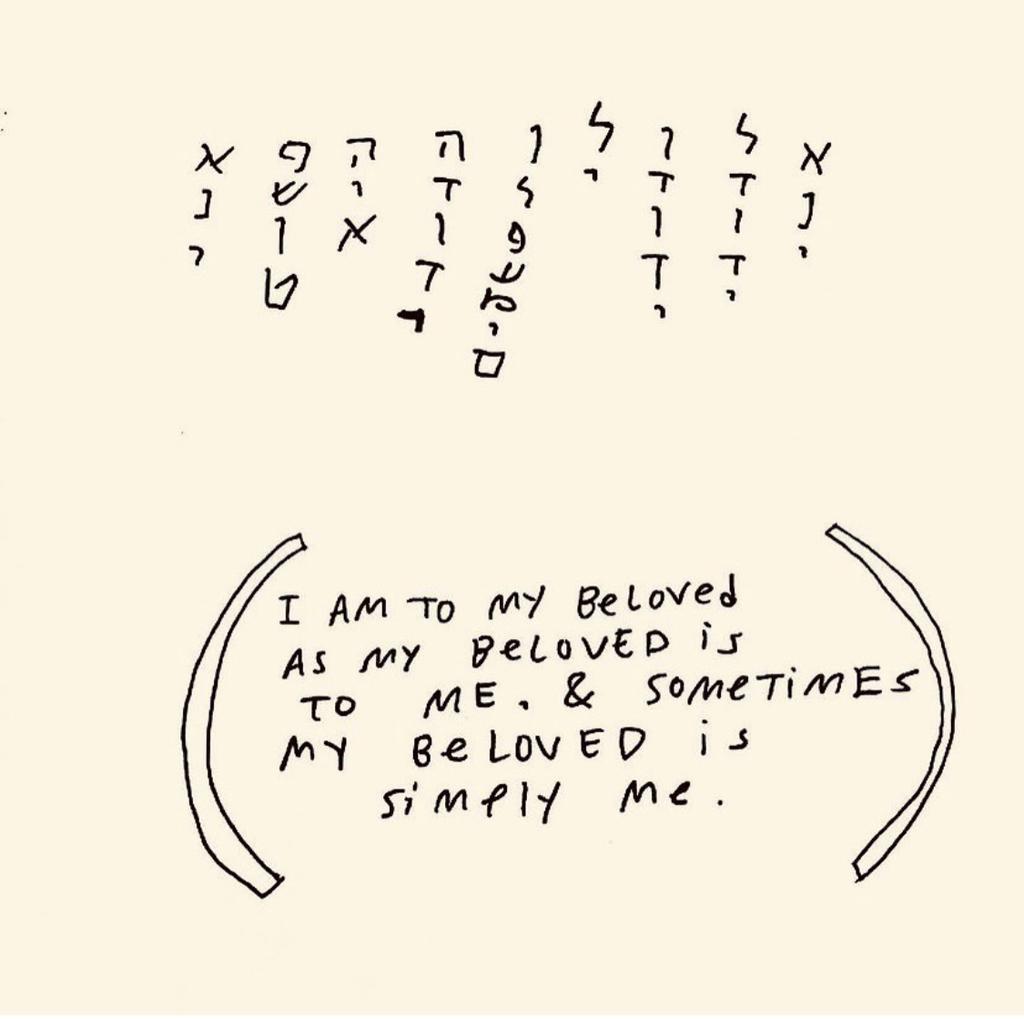
Artwork by @Jessica_Tamar_Deutsch
"“The beauty of what remains is neither passive nor accidental. We create it through the deliberate choices we make- chiseled chip by chiseled chip."
Rabbi Steve Leder, The Beauty of What Remains p. 223
Elul
Elul אֱלוּל : The Hebrew month preceding Rosh HaShanah during which one engages in self-reflection and evaluation in preparation for the High Holidays. Traditionally, the shofar is blown each day during the month. is the Hebrew month that precedes the High Holidays (Rosh HaShanah and Yom Kippur).
Some say that the Hebrew letters that comprise the word Elul – aleph, lamed, vav, lamed – are an acronym for “Ani l’dodi v’dodi li,” a verse from Song of Songs that means “I am my beloved’s and my beloved is mine.” Most often interpreted as love poetry between two people, the phrase also reflects the love between God and the Jewish people, especially at this season, as we assess our actions and behaviors during the past year and hope for blessings in the coming year.
Several customs during the month of Elul are designed to remind us of the liturgical season and help us prepare ourselves and our souls for the upcoming High Holidays.
1. BLOWING THE SHOFAR
Traditionally, the shofar is blown each morning (except on Shabbat) from the first day of Elul until the day before Rosh HaShanah. Its sound is intended to awaken the soul and kick start the spiritual accounting that happens throughout the month. In some congregations the shofar is sounded at the opening of each Kabbalat Shabbat service during Elul.
2. SAYING SPECIAL PRAYERS
Selichot (special penitential prayers) are recited during the month of Elul. A special Selichot service is conducted late in the evening – often by candlelight – on the Saturday night a week before Rosh HaShanah.
3. VISITING LOVED ONES' GRAVES
Elul is also a time of year during which Jews traditionally visit the graves of loved ones. This custom not only reminds us of the individuals on whose shoulders we now stand and helps us honor their memories, but also prompts us to think about our own lives and the legacies we will leave to others – kind words spoken, comfort offered, love given and received – which take on added meaning as we enter the High Holiday season. Rabbi Daniel B. Syme explains more about this custom.
4. READING PSALM 27
It is customary to read Psalm 27 each day from the beginning of Elul through Hoshana Rabbah, which is the last day of Sukkot.
5. REFLECTING
It also is a month during which we are encouraged to study and take time for personal reflection around our actions of the past year and to seek forgiveness from those we have wronged or with whom we otherwise have “missed the mark” in our interactions and behaviors.
By: Jane E Herman
https://reformjudaism.org/jewish-holidays/rosh-hashanah/elul-5-things-know-about-lead-high-holidays
The Babylonian Talmud (the repository of Jewish wisdom compiled in the 6th century CE) teaches that at the final judgment, we are asked three basic questions: Did you conduct your business with integrity? Did you set aside fixed times for study? Did you hope for better things to come? (Shabbat 31a).
Each of those three questions is worth thinking about, and we can begin during Elul. The coming year gives us the opportunity to turn – or perhaps to return – to a vision of our highest self. With the three “final judgment” questions in mind, here are some suggestions for bridging the gap between our current selves and our highest selves:
1. CARRY OUT YOUR BUSINESS WITH INTEGRITY.
Being ambitious in life encourages us to better ourselves – but excessive craving can be dangerous. Vaulting ambition often leads to vanity and disappointment. It is better, as one ancient rabbi suggested, to reach a point where we are each content with our own lot (Mishnah, Avot 4: 1).
2. SET UP A FIXED TIME TO STUDY.
“None is poor but he who lacks knowledge,” said an ancient sage (N’darim, 41a). The ancient rabbis knew the value of study, not only because it stimulates the mind and provides answers to many unknowns in life, but also because it often leads to righteous behavior.
The final goal in life is not mental gymnastics but carrying out deeds of loving-kindness toward others
3. HOPE FOR BETTER THINGS TO COME.
There is a Hebrew term that can refer to this hopeful outlook: yeshuah, literally meaning “salvation.” Even though this word has been understood differently throughout the ages, for me it means self-realization, namely to reach one’s highest potential in life. To become better, you need to keep the flame of hope alive.
In order to live a life of blessing, ask yourself this Elul: “What is most important for me, and how can I achieve it?” – and then go do it, starting now. It is a worthy endeavor.
by: Rabbi Rifat Sonsino, Ph.D.
https://reformjudaism.org/elul-do-you-know-your-priorities-life
A Poem for Elul
I stand here,
ready to begin
again,
to follow this road
of dust, that stretches
before me, but I cannot
see where it bends
and splits and
turns in on itself.
I have walked this
road before,
seven times seven,
and then seven more:
brought here
returned here
again and again
and yet the road is still
mystery.
ready to begin
again,
to follow this road
of dust, that stretches
before me, but I cannot
see where it bends
and splits and
turns in on itself.
I have walked this
road before,
seven times seven,
and then seven more:
brought here
returned here
again and again
and yet the road is still
mystery.
David's harp urges me
and the horns of Abraham's
dilemma push me,
and Jacob's ladder is crowded
with angels. They move aside,
not without some attitude,
so I may stumble up those
narrow rungs; still -
elevated though I am,
there is only dust
and a blaze of Glory
in the far distance.
and the horns of Abraham's
dilemma push me,
and Jacob's ladder is crowded
with angels. They move aside,
not without some attitude,
so I may stumble up those
narrow rungs; still -
elevated though I am,
there is only dust
and a blaze of Glory
in the far distance.
I am meant to follow,
with open hands
and open heart,
to feel the quickening
of my blood
that moves in equal time
with my shame
and my joy, my fear and
love, my grief and my ecstasy,
So that i may claim them
all, as they have
claimed me;
so that i may dance
at the gates
and be whole.
with open hands
and open heart,
to feel the quickening
of my blood
that moves in equal time
with my shame
and my joy, my fear and
love, my grief and my ecstasy,
So that i may claim them
all, as they have
claimed me;
so that i may dance
at the gates
and be whole.
By: Stacey Zisook Robinson, z"l
https://reformjudaism.org/beliefs-practices/prayers-blessings/poem-elul
Ethical Wills
“ If you had time to write just one letter, to whom would it be addressed? What would it say? What would you leave out? Would you chastise and rebuke? Would you thank, forgive, or seek to instruct?"
“I can remember things people said to me more than five decades ago when I was a small child. I can also recall lyrics to a song I heard half a century ago, but cannot recall what I had for breakfast two days ago. A lot of people have some sort of estate plan or at the very least a will. In that way, we are prepared for death when it comes to what will happen to our material possessions and wealth. But in the deepest sense, who gets our stuff when we die is the least important of all our bequests to the people we care most about. What matters most is the nonmaterial- the ethical, spiritual legacy of love we leave behind for our loved ones. Consider therefore the idea of creating an ethical will, a document that tells the people you love about the ideals you are leaving for them, not just the money and jewelry”
Rabbi Steve Leder, The Beauty of What Remains pg 181
Biblical Examples of Ethical Wills
(א) וַיִּקְרָ֥א יַעֲקֹ֖ב אֶל־בָּנָ֑יו וַיֹּ֗אמֶר הֵאָֽסְפוּ֙ וְאַגִּ֣ידָה לָכֶ֔ם אֵ֛ת אֲשֶׁר־יִקְרָ֥א אֶתְכֶ֖ם בְּאַחֲרִ֥ית הַיָּמִֽים׃(ב) הִקָּבְצ֥וּ וְשִׁמְע֖וּ בְּנֵ֣י יַעֲקֹ֑ב וְשִׁמְע֖וּ אֶל־יִשְׂרָאֵ֥ל אֲבִיכֶֽם׃(ג) רְאוּבֵן֙ בְּכֹ֣רִי אַ֔תָּה כֹּחִ֖י וְרֵאשִׁ֣ית אוֹנִ֑י יֶ֥תֶר שְׂאֵ֖ת וְיֶ֥תֶר עָֽז׃(ד) פַּ֤חַז כַּמַּ֙יִם֙ אַל־תּוֹתַ֔ר כִּ֥י עָלִ֖יתָ מִשְׁכְּבֵ֣י אָבִ֑יךָ אָ֥ז חִלַּ֖לְתָּ יְצוּעִ֥י עָלָֽה׃ {פ}(ה) שִׁמְע֥וֹן וְלֵוִ֖י אַחִ֑ים כְּלֵ֥י חָמָ֖ס מְכֵרֹתֵיהֶֽם׃(ו) בְּסֹדָם֙ אַל־תָּבֹ֣א נַפְשִׁ֔י בִּקְהָלָ֖ם אַל־תֵּחַ֣ד כְּבֹדִ֑י כִּ֤י בְאַפָּם֙ הָ֣רְגוּ אִ֔ישׁ וּבִרְצֹנָ֖ם עִקְּרוּ־שֽׁוֹר׃(ז) אָר֤וּר אַפָּם֙ כִּ֣י עָ֔ז וְעֶבְרָתָ֖ם כִּ֣י קָשָׁ֑תָה אֲחַלְּקֵ֣ם בְּיַעֲקֹ֔ב וַאֲפִיצֵ֖ם בְּיִשְׂרָאֵֽל׃ {פ}(ח) יְהוּדָ֗ה אַתָּה֙ יוֹד֣וּךָ אַחֶ֔יךָ יָדְךָ֖ בְּעֹ֣רֶף אֹיְבֶ֑יךָ יִשְׁתַּחֲו֥וּ לְךָ֖ בְּנֵ֥י אָבִֽיךָ׃(ט) גּ֤וּר אַרְיֵה֙ יְהוּדָ֔ה מִטֶּ֖רֶף בְּנִ֣י עָלִ֑יתָ כָּרַ֨ע רָבַ֧ץ כְּאַרְיֵ֛ה וּכְלָבִ֖יא מִ֥י יְקִימֶֽנּוּ׃(י) לֹֽא־יָס֥וּר שֵׁ֙בֶט֙ מִֽיהוּדָ֔ה וּמְחֹקֵ֖ק מִבֵּ֣ין רַגְלָ֑יו עַ֚ד כִּֽי־יָבֹ֣א שִׁילֹ֔ה וְל֖וֹ יִקְּהַ֥ת עַמִּֽים׃(יא) אֹסְרִ֤י לַגֶּ֙פֶן֙ עִירֹ֔ה וְלַשֹּׂרֵקָ֖ה בְּנִ֣י אֲתֹנ֑וֹ כִּבֵּ֤ס בַּיַּ֙יִן֙ לְבֻשׁ֔וֹ וּבְדַם־עֲנָבִ֖ים סוּתֹֽה׃(יב) חַכְלִילִ֥י עֵינַ֖יִם מִיָּ֑יִן וּלְבֶן־שִׁנַּ֖יִם מֵחָלָֽב׃ {פ}(יג) זְבוּלֻ֕ן לְח֥וֹף יַמִּ֖ים יִשְׁכֹּ֑ן וְהוּא֙ לְח֣וֹף אֳנִיֹּ֔ת וְיַרְכָת֖וֹ עַל־צִידֹֽן׃ {פ}(יד) יִשָּׂשכָ֖ר חֲמֹ֣ר גָּ֑רֶם רֹבֵ֖ץ בֵּ֥ין הַֽמִּשְׁפְּתָֽיִם׃(טו) וַיַּ֤רְא מְנֻחָה֙ כִּ֣י ט֔וֹב וְאֶת־הָאָ֖רֶץ כִּ֣י נָעֵ֑מָה וַיֵּ֤ט שִׁכְמוֹ֙ לִסְבֹּ֔ל וַיְהִ֖י לְמַס־עֹבֵֽד׃ {ס}(טז) דָּ֖ן יָדִ֣ין עַמּ֑וֹ כְּאַחַ֖ד שִׁבְטֵ֥י יִשְׂרָאֵֽל׃(יז) יְהִי־דָן֙ נָחָ֣שׁ עֲלֵי־דֶ֔רֶךְ שְׁפִיפֹ֖ן עֲלֵי־אֹ֑רַח הַנֹּשֵׁךְ֙ עִקְּבֵי־ס֔וּס וַיִּפֹּ֥ל רֹכְב֖וֹ אָחֽוֹר׃(יח) לִישׁוּעָֽתְךָ֖ קִוִּ֥יתִי יהוה׃ {ס}(יט) גָּ֖ד גְּד֣וּד יְגוּדֶ֑נּוּ וְה֖וּא יָגֻ֥ד עָקֵֽב׃ {ס}(כ) מֵאָשֵׁ֖ר שְׁמֵנָ֣ה לַחְמ֑וֹ וְה֥וּא יִתֵּ֖ן מַֽעֲדַנֵּי־מֶֽלֶךְ׃ {ס}(כא) נַפְתָּלִ֖י אַיָּלָ֣ה שְׁלֻחָ֑ה הַנֹּתֵ֖ן אִמְרֵי־שָֽׁפֶר׃ {ס}(כב) בֵּ֤ן פֹּרָת֙ יוֹסֵ֔ף בֵּ֥ן פֹּרָ֖ת עֲלֵי־עָ֑יִן בָּנ֕וֹת צָעֲדָ֖ה עֲלֵי־שֽׁוּר׃(כג) וַֽיְמָרְרֻ֖הוּ וָרֹ֑בּוּ וַֽיִּשְׂטְמֻ֖הוּ בַּעֲלֵ֥י חִצִּֽים׃(כד) וַתֵּ֤שֶׁב בְּאֵיתָן֙ קַשְׁתּ֔וֹ וַיָּפֹ֖זּוּ זְרֹעֵ֣י יָדָ֑יו מִידֵי֙ אֲבִ֣יר יַעֲקֹ֔ב מִשָּׁ֥ם רֹעֶ֖ה אֶ֥בֶן יִשְׂרָאֵֽל׃(כה) מֵאֵ֨ל אָבִ֜יךָ וְיַעְזְרֶ֗ךָּ וְאֵ֤ת שַׁדַּי֙ וִיבָ֣רְכֶ֔ךָּ בִּרְכֹ֤ת שָׁמַ֙יִם֙ מֵעָ֔ל בִּרְכֹ֥ת תְּה֖וֹם רֹבֶ֣צֶת תָּ֑חַת בִּרְכֹ֥ת שָׁדַ֖יִם וָרָֽחַם׃(כו) בִּרְכֹ֣ת אָבִ֗יךָ גָּֽבְרוּ֙ עַל־בִּרְכֹ֣ת הוֹרַ֔י עַֽד־תַּאֲוַ֖ת גִּבְעֹ֣ת עוֹלָ֑ם תִּֽהְיֶ֙יןָ֙ לְרֹ֣אשׁ יוֹסֵ֔ף וּלְקׇדְקֹ֖ד נְזִ֥יר אֶחָֽיו׃ {פ}(כז) בִּנְיָמִין֙ זְאֵ֣ב יִטְרָ֔ף בַּבֹּ֖קֶר יֹ֣אכַל עַ֑ד וְלָעֶ֖רֶב יְחַלֵּ֥ק שָׁלָֽל׃(כח) כׇּל־אֵ֛לֶּה שִׁבְטֵ֥י יִשְׂרָאֵ֖ל שְׁנֵ֣ים עָשָׂ֑ר וְ֠זֹ֠את אֲשֶׁר־דִּבֶּ֨ר לָהֶ֤ם אֲבִיהֶם֙ וַיְבָ֣רֶךְ אוֹתָ֔ם אִ֛ישׁ אֲשֶׁ֥ר כְּבִרְכָת֖וֹ בֵּרַ֥ךְ אֹתָֽם׃(כט) וַיְצַ֣ו אוֹתָ֗ם וַיֹּ֤אמֶר אֲלֵהֶם֙ אֲנִי֙ נֶאֱסָ֣ף אֶל־עַמִּ֔י קִבְר֥וּ אֹתִ֖י אֶל־אֲבֹתָ֑י אֶ֨ל־הַמְּעָרָ֔ה אֲשֶׁ֥ר בִּשְׂדֵ֖ה עֶפְר֥וֹן הַֽחִתִּֽי׃(ל) בַּמְּעָרָ֞ה אֲשֶׁ֨ר בִּשְׂדֵ֧ה הַמַּכְפֵּלָ֛ה אֲשֶׁ֥ר עַל־פְּנֵי־מַמְרֵ֖א בְּאֶ֣רֶץ כְּנָ֑עַן אֲשֶׁר֩ קָנָ֨ה אַבְרָהָ֜ם אֶת־הַשָּׂדֶ֗ה מֵאֵ֛ת עֶפְרֹ֥ן הַחִתִּ֖י לַאֲחֻזַּת־קָֽבֶר׃(לא) שָׁ֣מָּה קָֽבְר֞וּ אֶת־אַבְרָהָ֗ם וְאֵת֙ שָׂרָ֣ה אִשְׁתּ֔וֹ שָׁ֚מָּה קָבְר֣וּ אֶת־יִצְחָ֔ק וְאֵ֖ת רִבְקָ֣ה אִשְׁתּ֑וֹ וְשָׁ֥מָּה קָבַ֖רְתִּי אֶת־לֵאָֽה׃(לב) מִקְנֵ֧ה הַשָּׂדֶ֛ה וְהַמְּעָרָ֥ה אֲשֶׁר־בּ֖וֹ מֵאֵ֥ת בְּנֵי־חֵֽת׃(לג) וַיְכַ֤ל יַעֲקֹב֙ לְצַוֺּ֣ת אֶת־בָּנָ֔יו וַיֶּאֱסֹ֥ף רַגְלָ֖יו אֶל־הַמִּטָּ֑ה וַיִּגְוַ֖ע וַיֵּאָ֥סֶף אֶל־עַמָּֽיו׃
(1) And Jacob called his sons and said, “Come together that I may tell you what is to befall you in days to come.(2) Assemble and hearken, O sons of Jacob; Hearken to Israel your father:(3) Reuben, you are my first-born, My might and first fruit of my vigor, Exceeding in rank And exceeding in honor.(4) Unstable as water, you shall excel no longer; For when you mounted your father’s bed, You brought disgrace—my couch he mounted!(5) Simeon and Levi are a pair; Their weapons are tools of lawlessness.(6) Let not my person be included in their council, Let not my being be counted in their assembly. For when angry they slay men, And when pleased they maim oxen.(7) Cursed be their anger so fierce, And their wrath so relentless. I will divide them in Jacob, Scatter them in Israel.(8) You, O Judah, your brothers shall praise; Your hand shall be on the nape of your foes; Your father’s sons shall bow low to you.(9) Judah is a lion’s whelp; On prey, my son, have you grown. He crouches, lies down like a lion, Like the king of beasts—who dare rouse him?(10) The scepter shall not depart from Judah, Nor the ruler’s staff from between his feet; So that tribute shall come to him And the homage of peoples be his.(11) He tethers his ass to a vine, His ass’s foal to a choice vine; He washes his garment in wine, His robe in blood of grapes.(12)His eyes are darker than wine; His teeth are whiter than milk.(13) Zebulun shall dwell by the seashore; He shall be a haven for ships, And his flank shall rest on Sidon.(14) Issachar is a strong-boned ass, Crouching among the sheepfolds.(15) When he saw how good was security, And how pleasant was the country, He bent his shoulder to the burden, And became a toiling serf.(16) Dan shall govern his people, As one of the tribes of Israel.(17) Dan shall be a serpent by the road, A viper by the path, That bites the horse’s heels So that his rider is thrown backward.(18) I wait for Your deliverance, O LORD!(19) Gad shall be raided by raiders, But he shall raid at their heels.(20) Asher’s bread shall be rich, And he shall yield royal dainties.(21) Naphtali is a hind let loose, Which yields lovely fawns.(22)Joseph is a wild ass, A wild ass by a spring —Wild colts on a hillside.(23) Archers bitterly assailed him; They shot at him and harried him.(24) Yet his bow stayed taut, And his arms were made firm By the hands of the Mighty One of Jacob— There, the Shepherd, the Rock of Israel—(25) The God of your father who helps you, And Shaddai who blesses you With blessings of heaven above, Blessings of the deep that couches below, Blessings of the breast and womb.(26)The blessings of your father Surpass the blessings of my ancestors, To the utmost bounds of the eternal hills. May they rest on the head of Joseph, On the brow of the elect of his brothers.(27) Benjamin is a ravenous wolf; In the morning he consumes the foe, And in the evening he divides the spoil.”(28) All these were the tribes of Israel, twelve in number, and this is what their father said to them as he bade them farewell, addressing to each a parting word appropriate to him.(29) Then he instructed them, saying to them, “I am about to be gathered to my kin. Bury me with my fathers in the cave which is in the field of Ephron the Hittite,(30) the cave which is in the field of Machpelah, facing Mamre, in the land of Canaan, the field that Abraham bought from Ephron the Hittite for a burial site—(31) there Abraham and his wife Sarah were buried; there Isaac and his wife Rebekah were buried; and there I buried Leah—(32) the field and the cave in it, bought from the Hittites.”(33) When Jacob finished his instructions to his sons, he drew his feet into the bed and, breathing his last, he was gathered to his people.
(יב) וְעַתָּה֙ יִשְׂרָאֵ֔ל מָ֚ה יהוה אֱלֹהֶ֔יךָ שֹׁאֵ֖ל מֵעִמָּ֑ךְ כִּ֣י אִם־לְ֠יִרְאָ֠ה אֶת־יהוה אֱלֹהֶ֜יךָ לָלֶ֤כֶת בְּכׇל־דְּרָכָיו֙ וּלְאַהֲבָ֣ה אֹת֔וֹ וְלַֽעֲבֹד֙ אֶת־יהוה אֱלֹהֶ֔יךָ בְּכׇל־לְבָבְךָ֖ וּבְכׇל־נַפְשֶֽׁךָ׃(יג) לִשְׁמֹ֞ר אֶת־מִצְוֺ֤ת יהוה וְאֶת־חֻקֹּתָ֔יו אֲשֶׁ֛ר אָנֹכִ֥י מְצַוְּךָ֖ הַיּ֑וֹם לְט֖וֹב לָֽךְ׃(יד) הֵ֚ן לַיהוה אֱלֹהֶ֔יךָ הַשָּׁמַ֖יִם וּשְׁמֵ֣י הַשָּׁמָ֑יִם הָאָ֖רֶץ וְכׇל־אֲשֶׁר־בָּֽהּ׃(טו) רַ֧ק בַּאֲבֹתֶ֛יךָ חָשַׁ֥ק יהוה לְאַהֲבָ֣ה אוֹתָ֑ם וַיִּבְחַ֞ר בְּזַרְעָ֣ם אַחֲרֵיהֶ֗ם בָּכֶ֛ם מִכׇּל־הָעַמִּ֖ים כַּיּ֥וֹם הַזֶּֽה׃(טז) וּמַלְתֶּ֕ם אֵ֖ת עׇרְלַ֣ת לְבַבְכֶ֑ם וְעׇ֨רְפְּכֶ֔ם לֹ֥א תַקְשׁ֖וּ עֽוֹד׃(יז) כִּ֚י יהוה אֱלֹֽהֵיכֶ֔ם ה֚וּא אֱלֹהֵ֣י הָֽאֱלֹהִ֔ים וַאדני הָאֲדֹנִ֑ים הָאֵ֨ל הַגָּדֹ֤ל הַגִּבֹּר֙ וְהַנּוֹרָ֔א אֲשֶׁר֙ לֹא־יִשָּׂ֣א פָנִ֔ים וְלֹ֥א יִקַּ֖ח שֹֽׁחַד׃(יח) עֹשֶׂ֛ה מִשְׁפַּ֥ט יָת֖וֹם וְאַלְמָנָ֑ה וְאֹהֵ֣ב גֵּ֔ר לָ֥תֶת ל֖וֹ לֶ֥חֶם וְשִׂמְלָֽה׃(יט) וַאֲהַבְתֶּ֖ם אֶת־הַגֵּ֑ר כִּֽי־גֵרִ֥ים הֱיִיתֶ֖ם בְּאֶ֥רֶץ מִצְרָֽיִם׃(כ) אֶת־יהוה אֱלֹהֶ֛יךָ תִּירָ֖א אֹת֣וֹ תַעֲבֹ֑ד וּב֣וֹ תִדְבָּ֔ק וּבִשְׁמ֖וֹ תִּשָּׁבֵֽעַ׃(כא) ה֥וּא תְהִלָּתְךָ֖ וְה֣וּא אֱלֹהֶ֑יךָ אֲשֶׁר־עָשָׂ֣ה אִתְּךָ֗ אֶת־הַגְּדֹלֹ֤ת וְאֶת־הַנּֽוֹרָאֹת֙ הָאֵ֔לֶּה אֲשֶׁ֥ר רָא֖וּ עֵינֶֽיךָ׃(כב) בְּשִׁבְעִ֣ים נֶ֔פֶשׁ יָרְד֥וּ אֲבֹתֶ֖יךָ מִצְרָ֑יְמָה וְעַתָּ֗ה שָֽׂמְךָ֙ יהוה אֱלֹהֶ֔יךָ כְּכוֹכְבֵ֥י הַשָּׁמַ֖יִם לָרֹֽב׃
(12) And now, O Israel, what does the LORD your God demand of you? Only this: to revere the LORD your God, to walk only in His paths, to love Him, and to serve the LORD your God with all your heart and soul,(13) keeping the LORD’s commandments and laws, which I enjoin upon you today, for your good.(14) Mark, the heavens to their uttermost reaches belong to the LORD your God, the earth and all that is on it!(15) Yet it was to your fathers that the LORD was drawn in His love for them, so that He chose you, their lineal descendants, from among all peoples—as is now the case.(16) Cut away, therefore, the thickening about your hearts and stiffen your necks no more.(17) For the LORD your God is God supreme and Lord supreme, the great, the mighty, and the awesome God, who shows no favor and takes no bribe,(18) but upholds the cause of the fatherless and the widow, and befriends the stranger, providing him with food and clothing.—(19) You too must befriend the stranger, for you were strangers in the land of Egypt.(20) You must revere the LORD your God: only Him shall you worship, to Him shall you hold fast, and by His name shall you swear.(21) He is your glory and He is your God, who wrought for you those marvelous, awesome deeds that you saw with your own eyes.(22) Your ancestors went down to Egypt seventy persons in all; and now the LORD your God has made you as numerous as the stars of heaven.
(א) וַיִּקְרְב֥וּ יְמֵֽי־דָוִ֖ד לָמ֑וּת וַיְצַ֛ו אֶת־שְׁלֹמֹ֥ה בְנ֖וֹ לֵאמֹֽר׃(ב) אָנֹכִ֣י הֹלֵ֔ךְ בְּדֶ֖רֶךְ כׇּל־הָאָ֑רֶץ וְחָזַקְתָּ֖ וְהָיִ֥יתָֽ לְאִֽישׁ׃(ג) וְשָׁמַרְתָּ֞ אֶת־מִשְׁמֶ֣רֶת ׀ יהוה אֱלֹהֶ֗יךָ לָלֶ֤כֶת בִּדְרָכָיו֙ לִשְׁמֹ֨ר חֻקֹּתָ֤יו מִצְוֺתָיו֙ וּמִשְׁפָּטָ֣יו וְעֵדְוֺתָ֔יו כַּכָּת֖וּב בְּתוֹרַ֣ת מֹשֶׁ֑ה לְמַ֣עַן תַּשְׂכִּ֗יל אֵ֚ת כׇּל־אֲשֶׁ֣ר תַּעֲשֶׂ֔ה וְאֵ֛ת כׇּל־אֲשֶׁ֥ר תִּפְנֶ֖ה שָֽׁם׃(ד) לְמַ֩עַן֩ יָקִ֨ים יהוה אֶת־דְּבָר֗וֹ אֲשֶׁ֨ר דִּבֶּ֣ר עָלַי֮ לֵאמֹר֒ אִם־יִשְׁמְר֨וּ בָנֶ֜יךָ אֶת־דַּרְכָּ֗ם לָלֶ֤כֶת לְפָנַי֙ בֶּאֱמֶ֔ת בְּכׇל־לְבָבָ֖ם וּבְכׇל־נַפְשָׁ֑ם לֵאמֹ֕ר לֹֽא־יִכָּרֵ֤ת לְךָ֙ אִ֔ישׁ מֵעַ֖ל כִּסֵּ֥א יִשְׂרָאֵֽל׃(ה) וְגַ֣ם אַתָּ֣ה יָדַ֡עְתָּ אֵת֩ אֲשֶׁר־עָ֨שָׂה לִ֜י יוֹאָ֣ב בֶּן־צְרוּיָ֗ה אֲשֶׁ֣ר עָשָׂ֣ה לִשְׁנֵֽי־שָׂרֵ֣י צִבְא֣וֹת יִ֠שְׂרָאֵ֠ל לְאַבְנֵ֨ר בֶּן־נֵ֜ר וְלַעֲמָשָׂ֤א בֶן־יֶ֙תֶר֙ וַיַּ֣הַרְגֵ֔ם וַיָּ֥שֶׂם דְּמֵֽי־מִלְחָמָ֖ה בְּשָׁלֹ֑ם וַיִּתֵּ֞ן דְּמֵ֣י מִלְחָמָ֗ה בַּחֲגֹֽרָתוֹ֙ אֲשֶׁ֣ר בְּמׇתְנָ֔יו וּֽבְנַעֲל֖וֹ אֲשֶׁ֥ר בְּרַגְלָֽיו׃(ו) וְעָשִׂ֖יתָ כְּחׇכְמָתֶ֑ךָ וְלֹֽא־תוֹרֵ֧ד שֵׂיבָת֛וֹ בְּשָׁלֹ֖ם שְׁאֹֽל׃(ז) וְלִבְנֵ֨י בַרְזִלַּ֤י הַגִּלְעָדִי֙ תַּֽעֲשֶׂה־חֶ֔סֶד וְהָי֖וּ בְּאֹכְלֵ֣י שֻׁלְחָנֶ֑ךָ כִּי־כֵן֙ קָרְב֣וּ אֵלַ֔י בְּבׇרְחִ֕י מִפְּנֵ֖י אַבְשָׁל֥וֹם אָחִֽיךָ׃(ח) וְהִנֵּ֣ה עִ֠מְּךָ֠ שִֽׁמְעִ֨י בֶן־גֵּרָ֥א בֶן־הַיְמִינִי֮ מִבַּחֻרִים֒ וְה֤וּא קִֽלְלַ֙נִי֙ קְלָלָ֣ה נִמְרֶ֔צֶת בְּי֖וֹם לֶכְתִּ֣י מַחֲנָ֑יִם וְהֽוּא־יָרַ֤ד לִקְרָאתִי֙ הַיַּרְדֵּ֔ן וָאֶשָּׁ֨בַֽע ל֤וֹ בַֽיהוה לֵאמֹ֔ר אִם־אֲמִֽיתְךָ֖ בֶּחָֽרֶב׃(ט) וְעַתָּה֙ אַל־תְּנַקֵּ֔הוּ כִּ֛י אִ֥ישׁ חָכָ֖ם אָ֑תָּה וְיָֽדַעְתָּ֙ אֵ֣ת אֲשֶׁ֣ר תַּֽעֲשֶׂה־לּ֔וֹ וְהֽוֹרַדְתָּ֧ אֶת־שֵׂיבָת֛וֹ בְּדָ֖ם שְׁאֽוֹל׃(י) וַיִּשְׁכַּ֥ב דָּוִ֖ד עִם־אֲבֹתָ֑יו וַיִּקָּבֵ֖ר בְּעִ֥יר דָּוִֽד׃ {פ}
(1) When David’s life was drawing to a close, he instructed his son Solomon as follows:(2) “I am going the way of all the earth; be strong and show yourself a man.(3) Keep the charge of the LORD your God, walking in His ways and following His laws, His commandments, His rules, and His admonitions as recorded in the Teaching of Moses, in order that you may succeed in whatever you undertake and wherever you turn.(4) Then the LORD will fulfill the promise that He made concerning me: ‘If your descendants are scrupulous in their conduct, and walk before Me faithfully, with all their heart and soul, your line on the throne of Israel shall never end!’(5) “Further, you know what Joab son of Zeruiah did to me, what he did to the two commanders of Israel’s forces, Abner son of Ner and Amasa son of Jether: he killed them, shedding blood of war in peacetime, staining the girdle of his loins and the sandals on his feet with blood of war.(6) So act in accordance with your wisdom, and see that his white hair does not go down to Sheol in peace.(7) “But deal graciously with the sons of Barzillai the Gileadite, for they befriended me when I fled from your brother Absalom; let them be among those that eat at your table.(8) “You must also deal with Shimei son of Gera, the Benjaminite from Bahurim. He insulted me outrageously when I was on my way to Mahanaim; but he came down to meet me at the Jordan, and I swore to him by the LORD: ‘I will not put you to the sword.’(9) So do not let him go unpunished; for you are a wise man and you will know how to deal with him and send his gray hair down to Sheol in blood.”(10) So David slept with his fathers, and he was buried in the City of David.
1. What key values can you identify in each of these ethical wills?
2. What key concerns, anxieties, or regrets can you identify?
3. Do the departing individuals make requests of those they address their will to? If yes, what are the requests?
4. What are the key lessons or hopes you can distill from the will?
Examples of Ethical Wills
Eleazar ben Isaac of Worms (Eleazar the Great) (c.1050)
“Think not of evil; for evil-thinking leads to evil-doing. ... Take particular heed of cleanliness. Purify thy body, the dwelling-place of thy soul . ... Do not talk in the yeshiva during the lecture, but listen to the words of the wise. Despise no man; for many pearls may be found in a poor man's cloak. ... Be zealous in visiting the sick, for sympathy will lighten his sickness; but stay not too long, for his malady is heavy enough without thee. Enter cheerfully, and speak cheerfully. . . Be ever ready to follow the dead to the grave. For to him who does a kindness for nothing God shows unrequited favours .... Relieve the poor secretly, not openly; feed them at thy table, but do not watch them while they eat. ... My son, prepare for thine own journey, and light the lamp to show thee the way. ... Be not too much dreaded in thine own house, for this is the cause of many evils. ... Be faithful to everyone. Eat herbs rather than beg; beg only of God. . . . Put thy sins in one scale and thy penitence in another: they will balance. Add confession and prayer, and they will turn the balance in thy favour.. . .. Give of all thy food a portion to God. Let God's portion be the best, and give it to the poor.”
A Mother's Will
Published in the ghetto newspaper Warsaw-Krakow, 1940, this was signed only "Your mother"
"Judaism, my child, is the struggle to bring down God upon earth, a struggle for the sanctification of the human heart. This struggle your people wages not with physical force but with spirit, with sincere, heartfelt prayers, and by constant striving for truth and Justice.
So do you understand, my child, how we are distinct from others and wherein lies the secret of our existence on earth?
Knowing this, will your heart still be heavy, my child? Will you still say you cannot stand your fate? But you must, my child, for so were you commanded; it is your calling. This is your mission, your purpose on earth.
You must go to work alongside people of other nations...and you will teach them that they must come to a brotherhood of nations and to a union of all nations with God.
You may ask, "How does one speak to them?" This is how: "Thou shalt not murder; thou shalt not steal; thou shalt not covet; love thy neighbor as thyself..." Do these things and through their merit, my child, you will be victorious."
R. Reimer & Dr. Stampfer, Ethical Wills & How to Prepare Them, p 42
Eldad Pan
Eldad Pad was killed in Israel's War of Independence at the age of twenty, a veteran of many battles. The translation from the original Hebrew is by Sidney Greenbreg.
"Lately I have been thinking about what the goal of life should be. At best, man's life is short. His life may be kind or harsh, easy or difficult, but the time passes before he realizes it. An old person wants to live no less than na young person. The years of life do not satisfy the hunger for life. What then shall we do during this time?
We can reach either of two conclusions. The first is that since life is so short we should enjoy it as much as possible. The second is that precisely because life is short and no one can completely enjoy it (for we die with half our desire unsatisfied) [Eccles, Rabba 1:2], therefore we should dedicate life to a sacred and worthy goal, to sacrifice it for something which will be valued above life. At times the first feeling is stronger and at others the second one. Of late, however, I think that the second feeling is dominant. It seems that I am slowly coming to the conclusion that life by itself is worth little unless it serves something greater than itself"
R. Reimer & Dr. Stampfer, Ethical Wills & How to Prepare Them, p 82
Samuel Lipsitz
January 2 1951
"Dear Children:
Somewhere among these papers is a will made out by a lawyer. Its purpose is to dispose of any material things which I may possess at the time of my departure from this world to the unkown adventure beyond.
I hope its terms will cause no ill will among you. It seemed sensible when I made it. After all, it refers only to material things which we enjoy only temporarily.
I am more concerned with having you inherit something that is vastly more important.
There must be a purpose in the creation of man. Because I believe that (as I hope you will some day, for without it life becomes meaningless), I hope you will live right.
Live together in harmony! Carry no ill will toward each other. Bethink of the family. Help each other in case of need. Honor and care for your mother. Make her old age happy, as far as in your power. She deserves these things from you. It was your mother who always reproached me that I was not concerned enough about my children. She always insisted that we give them more. She would never visit a grandchild without a gift. I often felt she was too devoted a mother. Prove she was wise by being worthy of her devotion.
Carry your Jewish heritage with dignity. Though you may discard trivial ritual things, never discard your basic Jewish faith. You cannot live out your years happily without it.
Coming to the synagogue for Kaddish will reacquaint you with the old prayers and you may find comfort in them as I did when your grandfather died in 1923. I was then thirty-two years old.
Being together daily in business has its disadvantage as far as a father wanting to be noble in the eyes of his children. The aggravations and the heavy pressure in our business cause friction and annoyance with one another. Maybe we said things at such times that in calm retrospect we are sorry for. I was as guilty of these things as anyone. I hope such things will not stand out in your memory of me. I must have done some worthwhile things that left good impressions and nice thoughts with you. Please recall these, or anything you feel worth carrying on, on the occasion of my yahrtzeit. I leave with happy thoughts, because as your mother and I often said, "God has been good to us. Our children are all good, and married to good mates. Their lives can go on without us just as well. They will meet none who can speak ill of their parents."
I have enjoyed a loving and appreciative wife. She always praised and told me how capable I was. Then I had to live up to her expectations. Any worthwhile thing I ever did was due to her urging and her faith in me.
So don't mourn for me. I have enjoyed my life. Carry on from here, using the many blessings which you have (and I didn't have at your age) with wisdom and consecration to your family and mankind.
You can serve your family best by serving mankind also.
Remember me affectionately as your father.
Shmuel ben Shalom"
R. Reimer & Dr. Stampfer, Ethical Wills & How to Prepare Them, p 121
Madeline Medoff
Madeline Medoff (1915-1965) came to the US at the age of six with her parents, from Hungary. After graduating Cooper Union Institute of Technology with an engineering degree, the first woman to do so, she went on to a successful career which included editorship of Consumer reports and lifelong advocacy of the public interest.
"I Leave Behind Me Life
I do not fear death.
Its approach leaves me with regrets,
Regrets
Not for things I have missed seeing or doing or experiencing;
What difference these-
In death I cannot have them with me
No...
My regrets
Are for the memories I will not have left
With those I love, whom I must leave behind.
Have I missed giving warmth to my loved ones when they needed it
In favor of some selfish whim?
Have I deprived them of some cherished memories
By my refusal to admit them to my heart?
Were the trifling matters for which I scolded them and nagged them so important
As to give them pain both then and later-
Later, when I can no longer add
A balance of more love to sweeten the taste of the bitterness I sowed?
I do not fear death...
Not for me
But for them.
They are the me that is left behind.
They are my stake in eternity
And they matter, more than ever,
When they are the only future that remains.
Their destiny is set;
Whether they will or will not
They carry something of me in their lives
And in their children's
And in the children beyond.
For I have touched them!
My self has made its impression on theirs.
To the degree that I have shaped them
Have I shaped them well?
Have I so designed hem
That they can live well with themselves?
Will my faith in them
Have touched them so,
They they will go where they must with confidence?
Have I let them glimpse
That the world is big
And growing hour by hour
That there is no greater joy than to explore it-
To view its past-
to lift even the merest corner of its future.
To look it squarely in the face,
Whether with joy or horror,
But with unfilmed gaze.
Have I passed on to them the joy
Of a deed of human decency?
Of what satisfaction there is
In doing good-
Not without gain,
For there is measureless return
For even minute acts of consideration
Especially for those done unheralded
Then there is obligation,
Not in the common sense,
The sense of paying one's debts
Or saying thanks for favors done,
But in a broader view.
A view that involves all mankind, that reckons as obligation
The duty to do kindnesses unasked
Or at least unrecquired,
To do it willingly and gladly
And without keeping score.
Will they know love?
Not passion- love.
The kind that does not ask
Nor care about reward.
The kind that seeks only to give to the loved one,
The kind that has its satisfaction in a look of momentary joy
That is relaxed and free of question,
Of rivalry, of jealousy, of fear;
That can keep its vigor,
Over the years and over the miles.
The kind that gives and asks without the insult of questioning
This is true love,
Much more so than the kind where passion flames
And burns itself out
Leaving ashes, or at best
A not-too-bitter memory.
Do they know that I love them
Not from duty or some awkward sense of conventional piety
But because they are so close to me
They are me-
And when I am no more
They are more me than ever
Have I taught them these
And many, many things,
The things of elemental beauty
That give me joy
Far, far more real
Than the contrived, man-made amusements
That insult the mind, the ear, the eye.
Have I taught them the joy of work,
The satisfaction of working well,
The special pride of accomplishment in a task well mastered
Into which one puts more
Than the minimum essentials for completion;
into which one puts a little of one's self,
And from which one derives
Far, far more than one has funnelled in.
I have waited until now
To speak of Faith and God
For this I cannot teach them.
This they must learn for themselves.
My kind of faith will not be theirs, exactly,
Nor would I wish it to be
Mine serves me well-
It was not handed me
But grew from years of searching and not finding
Then searching more.
For me it is good
With it I am comfortable
It is rich
And as I search more, grows richer
Faith, like God, has oneness
But there is no one Faith,
No one God
That can serve all.
Each must find his own,
Must search and find it.
It is a quest worthwhile,
More than any that I know.
For its fulfillment is peace
And lack of fear;
And understanding,
And the capacity
To live with one's self and others
And, if necessary, to die.
No, I do not fear daeth
For I leave behind me
Life. "
R. Reimer & Dr. Stampfer, Ethical Wills & How to Prepare Them, p 134
Nitzah Marsha Jospe
1980
"I can't really tell you what I want for you, because even now I don't really know what I want for myself. What is important is to make each day good, and not to say "tomorrow" or "in the future it will be better." Happiness is a goal, but not something we must have every moment. That is not life.
I want you to be good Jews. It's something I've always been proud of...I would like to be able to help you and enjoy you, just as my parents did with me. Since that is not possible, I want you to know how much I love you. I wish you had more memories of me to help you know me.
Sometimes the memories are better than the reality.
The saddest part is leaving you and not knowing how you will develop. I would like to think you will be good, honest people, who have enough self-esteem and self-worth to stand up for yourselves, and not be afraid to say what you think.
Don't think anyone else is better than you are. You are as good as anyone. Every person is special, and so is each of you; not just to me, but to yourselves.
You, of course, want your own things from your own life, but parents can't help having dreams for their children.
You mustn't be bound by what I would life for you. I expect you to go your own way as good people, the best way you know how"
R. Reimer & Dr. Stampfer, Ethical Wills & How to Prepare Them, p 155
Sam Levenson
1911-1980
I leave you my unpaid debts. They are my greatest assets. Everything I own- I owe:
1. To America I owe a debt for the opportunity it gave me to be free and to be me
2. To my parents I owe America. They gave it to me and I leave it to you. Take good care of it.
3. To the biblical tradition I owe the belief that man does not live by bread alone, nor does he live alone at all. This is also the democratic tradition. Preserve it
4. To the six million of my people and to the thirty million other humans who died because of man's inhumanity to man, I owe a vow that it must never happen again
5. I leave you not everything I never had, but everything I had in my lifetime: a good family, respect for learning, compassion for my fellowman, and some four-letter words for all occasions: words like "help," "give," "care," "feel," and "love."
Love, my dear grandchildren, is easier to recommend than to define. I can tell you only that like those who came before you , you will surely know when love ain't; you will also know when mercy ain't and brotherhood ain't.
The millenium will come when all the "ain'ts" shall have become "ises" and all the "ises" shall be for all, even for those you don't like.
Finally, I leave you the years I should like to have lived so that I might possibly see whether your generation will bring more love and peace to the world than ours did. I not only hope you will. I pray that you will.
Grandpa Sam Levenson"
R. Reimer & Dr. Stampfer, Ethical Wills & How to Prepare Them, p 162
1. What key values can you identify in each of these ethical wills?
2. What key concerns, anxieties, or regrets can you identify?
3. Do the departing individuals make requests of those they address their will to? If yes, what are the requests?
4. What are the key lessons or hopes you can distill from the will?
Conclusion
“And what about us? Are we learning the lesson about life that our loved ones’ deaths have come to teach us? What are we leaving behind for our own families and friends to carry with them when we are gone? For just as surely as we carry the people we love, so too will we be carried by people who love and remember us. Will they carry in their hearts and minds’ eyes the certain knowledge of our unfailing love? Will we leave behind for them memories of laughter, wisdom, goodness, and generosity? Will their memories of us bring them joy? .... The profound and simple truth is that we are each writing our own eulogies every day with the pen of our lives"
Rabbi Steve Leder, The Beauty of What Remains